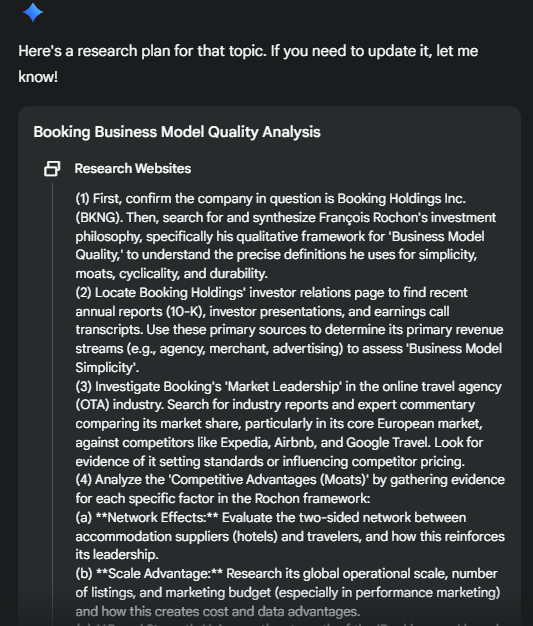
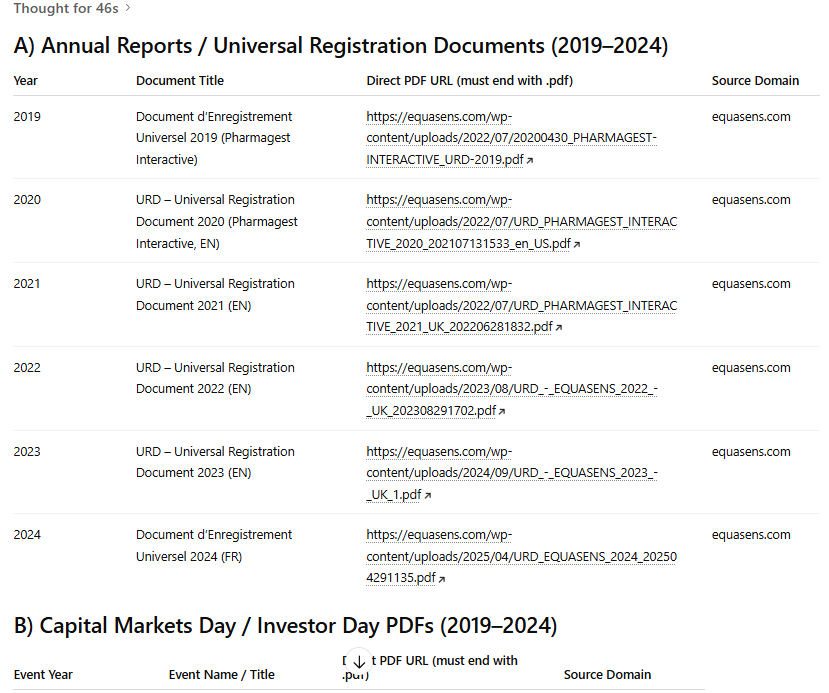
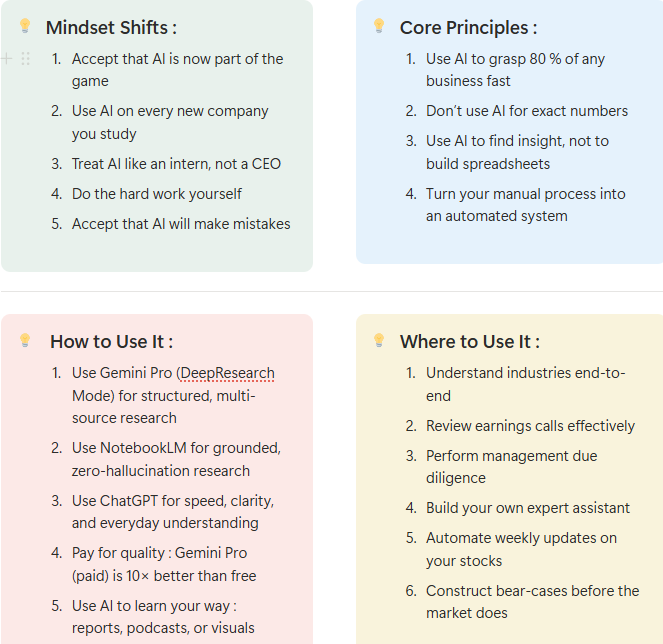
프롬프트 - 편향되어 알아채지 못하는 위험을 AI로 포착

퀄리티기업연구소
2025.11.22조회수 137회
퀄리티기업연구소
구독자 1,408명구독중 112명
"투자의 질을 중시하며, 장기적 안목으로 시장을 바라봅니다. 비단 재테크뿐만 아니라 인생 전반에 걸쳐 복리의 힘을 믿고, 그 원칙을 실천에 옮기는 곳입니다. 여기서는 깊이 있는 분석과 지속 가능한 성장 전략을 공유하며, 함께 성장하는 지혜를 나눕니다."
AI의 가장 큰 장점은 간단합니다. 바로 기계라는 점입니다.
적어도 현재로서는 그렇습니다...
그리고 이 한 가지 사실이 AI에게 인간 투자자는 결코 가질 수 없는 우위를 제공합니다.
기계는 주식에 집착하지 않습니다. CEO와 사랑에 빠지지 않습니다. "스토리가 여전히 좋기" 때문에 위험 신호를 정당화하지 않습니다.
투자자로서 우리는 위험이 눈앞에 닥칠 때까지 무시하는 경향이 있습니다.
시장이 위험을 알아차리기 전에 AI를 사용하여 실제 비즈니스 위험을 포착하기 위한 3단계 시스템은 다음과 같습니다.
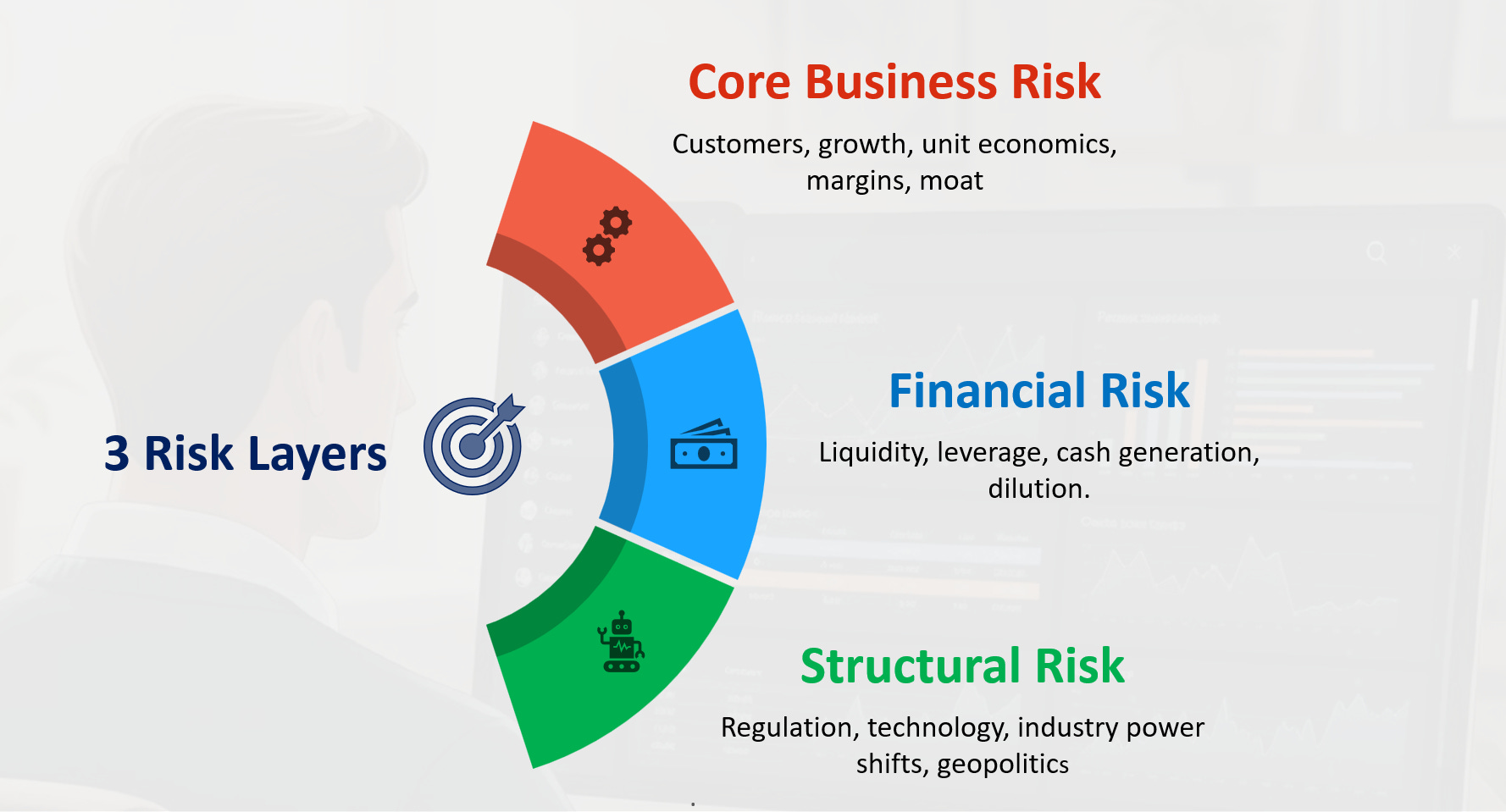
각 레이어는 서로 다른 측면을 확인하며, 이들을 통해 무엇이 사업을 무너뜨릴 수 있는지에 대한 전체 그림을 얻을 수 있습니다.
레이어 1: 사업 내부 – 운영 엔진 (고객, 마진, 성장, 해자).
레이어 2: 사업 배경 – 재무 기반 (유동성, 레버리지, 현금 흐름).
레이어 3: 사업 주변 – 외부 요인 (규제, 기술, 산업 변화).
자세히 살펴보겠습니다. 각 레이어에는 즉시 실행할 수 있도록 복사-붙여넣기 가능한 프롬프트가 하나씩 제공됩니다.
레이어 1은 내부에서 사업을 무너뜨릴 수 있는 요소를 식별합니다. 이는 회계가 아닌 사업의 실제 메커니즘에 관한 것입니다. 이 단계는 한 가지 핵심 질문에 답합니다. "이 사업의 엔진은 정말 강력한가... 아니면 이미 초기 균열을 보이고 있는가?" 당신은 기계를 계속 작동시키는 모든 것에 압박 테스트를 가합니다.
고객이 떠나는 이유
성장을 늦추는 요인
마진을 압축하는 요인
단위 경제(unit economics) 중 취약한 부분
해자가 침식될 수 있는 방법
어떤 추세가 초기 약점을 시사하는지
이 단계를 건너뛰면 다른 모든 레이어는 의미를 잃습니다. 당신은 엔진을 먼저 이해해야 합니다.
프롬프트 레이어 1 (복사-붙여넣기 준비 완료)
Role:
You are my senior business analyst. Your job is to produce a clear, rigorous, evidence-driven diagnostic of the company’s Core Business Risk (Layer 1).
Company: [insert your stock here]
Mission:
Identify, explain, and quantify the true operational risks that could materially weaken the company’s core engine: moat, customers, revenue drivers, margins, and unit economics.
1. Executive Summary (start with this)
Give a concise, structured summary of the 5–7 highest-impact risks, ranked by severity and likelihood.
Each item = one line: Risk → Why it matters → Evidence indicator.
2. Customer Risk
→ Why could customers leave?
List all realistic reasons and give concrete triggers: price, switching cost, product relevance, quality, alternatives, budget cuts, onboarding friction.
→ Impact on business
Explain how each scenario affects:
revenue
average spend
retention
sales cycles
expansion rate
→ Evidence check
Are there current signs in filings or data that any scenario is starting? (Yes/No + 1 line proof)
3. Growth Risk
→ What could make revenue stop growing?
Analyze barriers: TAM saturation, competitor encroachment, product fatigue, weaker pipelines, sales execution, distribution constraints.
→ Impact quantification
Describe how each factor would hit:
top line
new customer acquisition
pricing power
wallet share
→ Early indicators
Highlight signals the company should monitor.
4. Margin Risk
→ What could make margins decline?
Assess mix shift, pricing pressure, COGS inflation, new product dilution, loss of economies of scale, weaker utilization.
→ Unit economics view
Explain which parts of the model are sensitive and why.
→ Evidence check
Show relevant trailing trends if visible.
5. Moat Risk
→ What is the moat? Break it down.
Switching costs, brand, network effects, scale, IP, distribution, regulation.
→ What could erode each moat?
Identify mechanisms competitors might use to weaken it.
→ Detect early signs of erosion
Give concrete metrics ...

항상 좋은 글 감사드립니다!