스탠리 드러켄밀러: 전설적인 투자자의 사고 방식 속으로(1) (Nov. 6 24)

돌연변이
2024.11.08조회수 42회
돌연변이
구독자 345명구독중 76명
지혜로운 사람이 되고 싶습니다.
"I may be paranoid, but not an android"
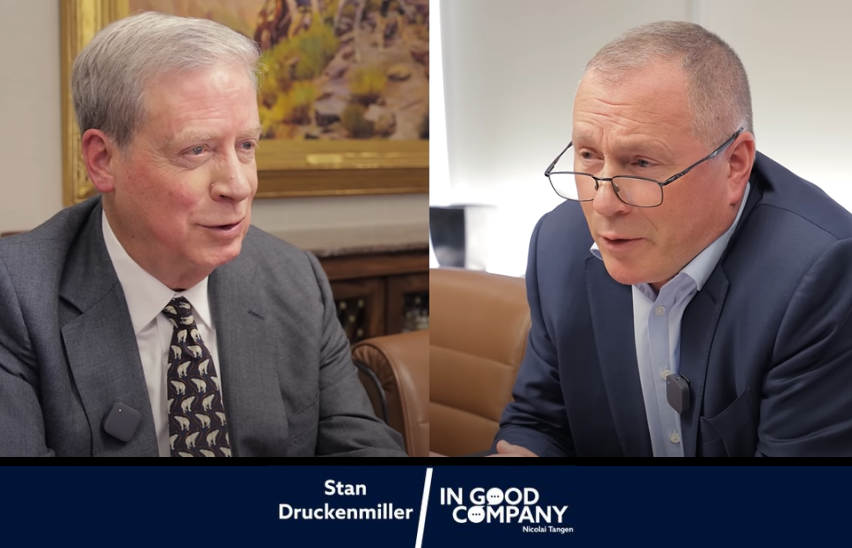
드러켄밀러의 투자철학을 보다 깊게 이해할 수 있게 하는 좋은 인터뷰이었기에, 전문 번역으로 소개해드립니다.
(글이 길어, 2편으로 나누었어요)
원본 유튜브/팟캐스트:
Stan Druckenmiller | Podcast | In Good Company | Norges Bank Investment Management - YouTube
https://shows.acast.com/622618c7057f3400120d15db/672b3724743b21a6147b0489
요약 및 정리:
Aurum님의 Norges Bank에서 스탠리 드러켄밀러 발표(24년 11월 6일)Moonlight (valley.town)
사회자(Nikolaj Tangen):
Hi everybody, I'm Nikolaj Tangen, the CEO of the Norwegian Southern Wealth Fund, and today I'm here with Stan Druckenmiller, a proper legend in the investment world. Stan, what a pleasure to be here.
안녕하세요, 여러분. 저는 노르웨이 국부펀드 CEO인 Nikolaj Tangen입니다. 오늘 전설적인 투자자 Stan Druckenmiller와 함께합니다. 만나서 반갑습니다, Stan.
Stan Druckenmiller:
Happy to see you, Nikolaj.
만나서 반가워요, Nikolaj.
사회자:
Now, what are the most important data you're looking at these days?
요즘 주목하고 계신 가장 중요한 데이터는 무엇인가요?
Stan Druckenmiller: 사회자:
Currently? Yeah.
현재요? 네.
Stan Druckenmiller:
Interestingly enough, I'm known as a macro investor, but I do a macro from the bottom up. So we're listening primarily to companies, and we're not seeing any material signs of weakness, other than maybe in the housing market, but that's from a very elevated price level. So we're not seeing bottom up information indicating to us that there's an economic problem any time in the next three to six months. I would also say I'm revealing now that I'm more of a market animal than an economist, that we look at financial conditions. They've been very, very loose. I mean, they're looser, looser than they were when the Fed actually started tightening. They've tightened considerably in the last four or five weeks, ironically, ever since the Fed cut, because the dollar has rallied, and obviously interest rates have gone up. But they're still quite above normal. So that's pretty much the data we're looking at
흥미롭게도 저는 매크로 투자자로 알려져 있지만, 저는 바텀업(bottom up)에서부터 시작하는 매크로 접근을 하고 있습니다. 그래서 주로 회사들의 목소리를 듣고 있는데요, 주택 시장을 제외하고는 어떤 실질적인 약세 신호는 보이지 않고 있습니다. 다만, 주택 시장은 아주 높은 가격대에서 약간의 약세를 보일 뿐입니다. 그래서 앞으로 3~6개월 동안 경제적 문제가 발생할 것이라는 바닥부터 올라오는 정보는 보이지 않습니다. 또, 제가 시장에 더 중점을 둔 투자자임을 밝히며 말씀드리자면, 우리는 금융 환경을 살펴보고 있습니다. 금융 환경은 매우, 매우 느슨했어요(자금 조달이 쉬워졌어요). 연준이 금리 인상을 시작했을 때보다도 느슨했을 정도였죠. 그런데 지난 4~5주 동안, 특히 연준의 금리 인하 이후 아이러니하게도 지난 4~5주 동안 달러가 강세를 보이고 금리가 상승했기 때문에 연준은 상당히 긴축했습니다. 하지만 여전히 정상 수준보다 꽤 높은 상태입니다. 이것이 우리가 보고 있는 데이터입니다.
I'd say the other thing I'm focused on, I've been obsessed with whether we were in the 70s, really since 2021, when this whole inflationary episode started. And I'd say two years ago, or a year and a half ago, I was very confident that inflation was going to come down, which I was right on, but I was worried about the economy, which I was completely wrong on. More recently, and you can take this with a grain of salt, since I had one right and one wrong there, I've switched to being more worried about inflation going forward than the economy itself. Why do I say that? If we go back to the 70s, there was an episode with OPEC that set off an inflation. You had a recession, and inflation came down, I think, from about 8 to 3.
이제 우리가 주시하고 있는 다른 데이터에 대해 말씀드리자면, 저는 2021년부터 이번 인플레이션이 시작된 이후로 70년대로 돌아가고 있는지에 대해 강박적으로 생각하고 있습니다. 1년 반 전에는 인플레이션이 내려갈 것이라는 확신이 있었고, 이는 맞았지만 경제에 대한 우려는 완전히 틀렸습니다. 최근에는, 제가 한 번 맞추고 한 번 틀렸으니 이것을 약간 걸러서 들으셔도 되지만, 저는 경제 자체보다는 앞으로의 인플레이션에 대한 우려로 생각이 바뀌었습니다. 왜 그렇게 생각하냐면요, 70년대로 돌아가보면, OPEC의 사건으로 인해 인플레이션이 촉발되었고, 이후 불황이 찾아오면서 인플레이션이 약 8에서 3으로 내려갔었죠.
사회자:
And then went back up again.
그리고는 다시 상승했죠.
Stan Druckenmiller:
Yes. And what's bothered me and what I have wanted to see, you're exactly right, it went back up again. It went back up again, and the number of months would correlate to the bottom being right about now.
네, 맞아요. 그리고 저를 괴롭히고 계속 지켜보고 있던 부분인데, 말씀하신 대로 인플레이션이 다시 상승했죠. 이번에도 다시 상승했으며, 그 저점이 지금쯤일 것이라고 예상되는 개월 수와 일치합니다.
So my confidence a year, a year and a half ago, was we were going to have that period where we came down again, and then we'd see. And I'm a little worried that the Fed has declared victory too early. I don't have conviction like I had in 21 that inflation was going to go up. That's when the money supply was growing 40% and all sorts of things were happening. But I also don't have conviction that they've snuffed this thing out and won the battle. And to cut 50 basis points with credit spreads tight, gold at new highs, equities roaring, no sign of weakness, material weakness in the economy. Of course, there are some spots. That just makes me nervous that this thing could turn up again.
그래서 1년, 1년 반 전에는 인플레이션이 다시 내려가는 시기가 올 것이라는 확신이 있었고, 그 이후 상황을 지켜보자는 생각이었어요. 그런데 2021년처럼 인플레이션이 상승할 것이라는 강한 확신은 이없습니다만, 연준이 너무 일찍 승리를 선언한 게 아닌가 조금 걱정됩니다. 당시에는 통화 공급이 40%나 증가했고 온갖 일이 벌어지고 있었죠. 그러나 저는 그들이 이제 인플레이션을 완전히 잡고 전쟁에서 승리했다고도 확신하지 못하겠어요. 물론 일부 지점에서는 약간의 불안 요소가 있습니다만, 신용 스프레드가 타이트하고, 금값은 최고치를 기록하고, 주식은 폭등하고, 경제에는 실질적인 약세 신호가 없는 상황에서 50bp를 인하하는 건 의문스럽습니다. 그래서 이 상황이 다시 악화될 수 있다는 점이 걱정됩니다.
사회자:
What would make it turn up again? What would be the factors?
그럼 어떤 요인이 인플레이션을 다시 상승시킬 수 있을까요?
Stan Druckenmiller:
I think what I just said, easing into financial conditions. Let's say Trump wins. If Trump wins, you could have animal spirits from the business community who are dying for deregulation. You could have tariffs, which are on the margin inflationary. Immigration has been a great boon to this country. Maybe not the way it was done, but it certainly enabled us to have growth without inflation and labor materially the last two or three years. So the combination of animal spirits, recovery doing better than it is. I'm just open-minded to it.
저는 방금 말씀드린 금융 환경의 완화가 요인이 될 수 있다고 생각합니다. 예를 들어, 트럼프가 승리한다고 가정해 봅시다. 트럼프가 이긴다면, 규제 완화를 간절히 바라는 비즈니스 커뮤니티의 "동물적 영혼"이 부활할 수 있습니다. 그리고 이는 인플레이션을 약간 유발할 수 있는 관세가 부과될 가능성도 있습니다. 이민은 이 나라에 큰 혜택을 주었습니다. 방법 자체가 최적은 아니었을지 몰라도, 분명 지난 2~3년 동안 인플레이션 없이 노동력을 유지하며 성장을 가능하게 했습니다. 그래서 동물적 영혼의 부활, 경제 회복의 예상보다 좋은 성과 등이 인플레이션 상승 요인이 될 수 있습니다. 저는 그냥 열린 생각으로 받아들이고 있습니다.
사회자:
Why is it so urgent for the central bank to cut, given this?
이런 상황에서 중앙은행이 금리 인하를 단행하는 것이 왜 그렇게 시급할까요?
Stan Druckenmiller:
Honestly, I don't take the nefarious view that Powell is doing it for, quote, unquote, political reasons. I do think he's obsessed with the soft landing. And I think he's obsessed with his legacy and having made the mistake he made in 21. And he's being egged on by other economists in the press. To me, the Fed's job is to avoid the big, big mistakes, like the 70s, like the great financial crisis, like the big inflation we just had. But all this fine-tuning and worrying about a soft landing, that is not the job of the Fed, in my opinion. It's to maximize employment for the long term, not for the next three months or the next four months. But I think the Fed's obsession with nailing this so-called soft landing, I would remind everybody that the reason we're having a landing is because they let inflation go from 2% to 9%. So there was no need for a landing for 20 years. But I think that's what they're obsessed with. I don't really, I don't know.
솔직히 저는 파월 의장이 정치적 이유 때문에 그렇게 하고 있다는 사악한 견해는 받아들이지 않습니다. 저는 그가 연착륙에 집착하고 있다고 생각합니다. 그리고 저는 그가 자신의 유산에 집착하고 21년에 저지른 실수에 집착하고 있다고 생각합니다. 그리고 그는 언론의 다른 경제학자들로부터 공격을 받고 있습니다. 제가 보기에 연준의 임무는 70년대와 같은 큰 실수, 즉 대금융위기나 최근의 큰 인플레이션과 같은 큰 실수를 피하는 것입니다. 하지만 이 모든 미세 조정과 연착륙에 대한 걱정은 제 생각에는 연준이 할 일이 아닙니다. 연준의 역할은 향후 3개월이나 4개월이 아니라 장기적으로 고용을 극대화하는 것입니다. 하지만 연준이 소위 연착륙에 집착하는 이유는 인플레이션이 2%에서 9%로 올라갔기 때문이라는 점을 모두에게 상기시키고 싶습니다. 그래서 20년 동안 연착륙할 필요가 없었습니다. 하지만 저는 그들이 그것에 집착하고 있다고 생각합니다. 잘 모르겠어요.
사회자:
How much of a problem is the forward guidance?
포워드 가이던스가 문제라는 의견이신가요?
Stan Druckenmiller:
It's a huge problem. My friend Jim Grant says they're forward guidance dependent, not data dependent. It's a problem because once you do forward guidance, you eliminate your optionality. And I think, Nikolai, you and I being in this business, we know we have to change our mind when we're wrong. This Fed has shown over and over again that they think if they change their mind, they're losing credibility. So it makes them have their hands tied behind their back. I'm wrong all the time. I think my record is mainly because when I'm wrong, I change my mind. Not that I'm always right. I'm certainly not. Forward guidance seems to tie them into positions where and eliminate flexibility they need.
큰 문제입니다. 제 친구 짐 그랜트는 데이터에 의존하는 것이 아니라 포워드 가이던스에 의존한다고 말합니다. 포워드 가이던스를 사용하면 선택의 여지가 사라지기 때문에 문제가 됩니다. 그리고 니콜라이, 당신과 저는 이 업계에 종사하고 있기 때문에 우리가 틀렸을 때 마음을 바꿔야 한다는 것을 알고 있습니다. 연준은 마음을 바꾸면 신뢰를 잃는다고 생각하는 모습을 반복해서 보여줬습니다. 그래서 그들은 손이 묶여 있습니다. 저는 항상 틀립니다. 제 기록은 주로 제가 틀렸을 때 마음을 바꾸기 때문이라고 생각해요. 제가 항상 옳다는 것은 아닙니다. 절대 그렇지 않죠. 포워드 가이던스는 직원들을 한 자리에 묶어두고 필요한 유연성을 없애는 것 같습니다.
사회자:
How big a problem is the budget deficit?
예산 적자가 얼마나 큰 문제인가요?
Stan Druckenmiller:
As a practitioner, it's something I can't be obsessed with on a three to six month basis. As an American, it's something I'm really obsessed with because debt to GDP can't go up forever. And to me, we have a reckoning, but I don't know how to time when that's going to take place. I will say that because the reserve currency, we've been permitted to engage in behavior that say the Brits couldn't have behaved in. There's a new term I have, getting Liz's trust(Liz Truss).
실무자로서 3~6개월 단위로 집착할 수는 없는 일이지만, 미국인으로서 저는 GDP 대비 부채가 영원히 올라갈 수 없기 때문에 정말 집착하 게 되는 문제입니다. 저에게는 언젠가 이에 대한 심판의 순간이 올 거라고 생각하지만, 그 시기를 정확히 예측하는 것은 어렵습니다. 다만 기축통화를 가지고 있기 때문에, 영국 같은 국가들이 할 수 없는 행동을 할 수 있었던 것 같습니다. 요즘 제가 새로 쓰는 표현이 있는데, ‘Liz’s trust(Liz Truss)’를 얻는다는 거예요.
(발음을 생각하면 제 생각에는 Trust이긴 해서, 일단 Trust(신뢰)로 언어유희를 했다고 생각하고 쓰고 있었습니다. 영국 전총리인 Liz Truss가 영국 경제와 파운드화 가치 및 신뢰도에 미친 부정적 영향을 끼친 사건을 생각하시면 됩니다; 비슷한 류의 단어: Truss Effect)
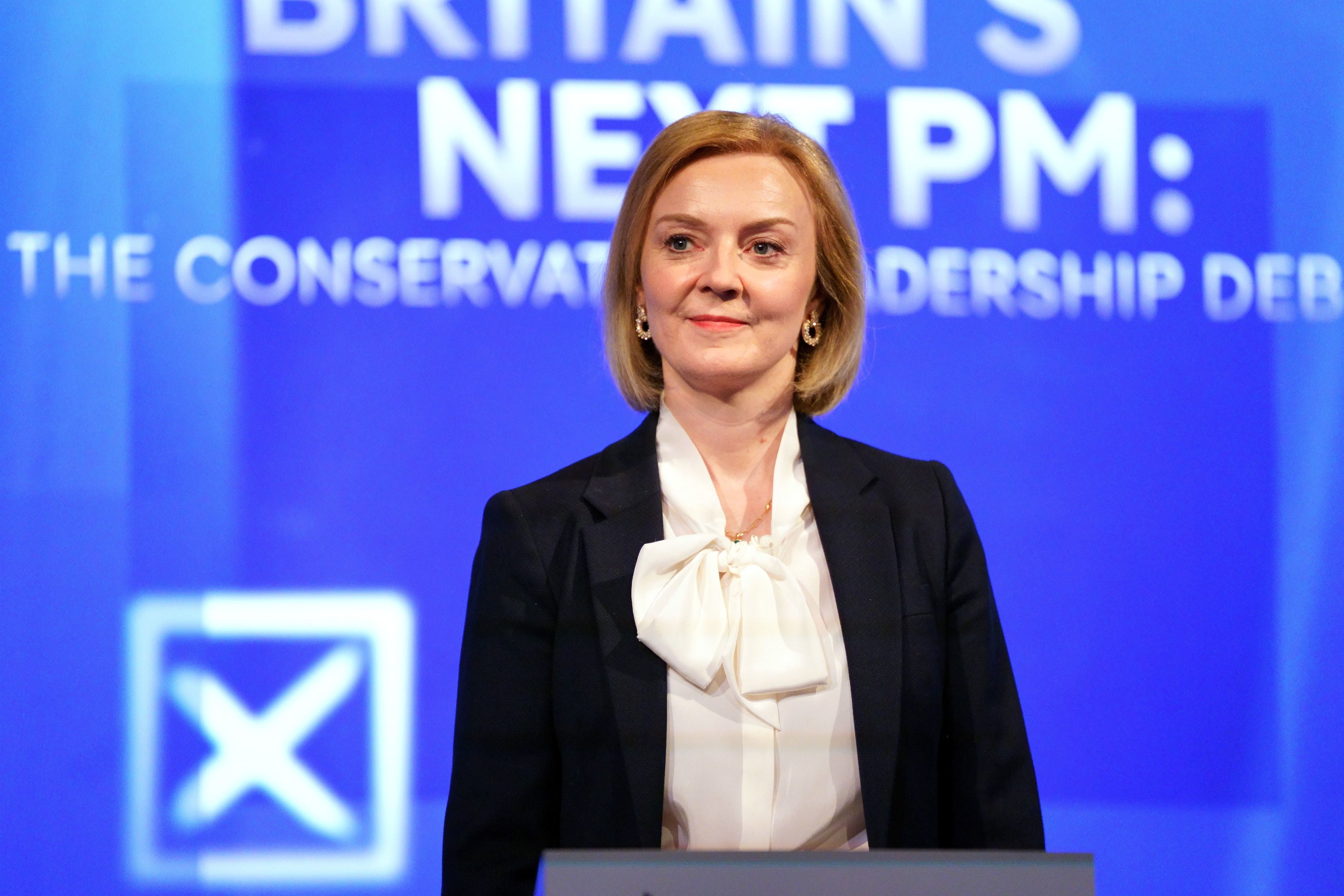
(Lizz Truss 총리, 이미지 출처: Image: Avalon/Photoshot/picture alliance )
We haven't been Liz's trust(Liz Truss) because we are the reserve currency. Even though if you look at everything we're doing, it's much more radical than the Brits were doing. What's that old saying? How do you go bankrupt slowly and then suddenly? Running deficits with full employment, basically at 7% of GDP, is a recipe that can't last forever. One of the reasons we haven't paid for it is in COVID. The entire private sector, 80% of individuals refinance their mortgages. So, the average mortgage rate is still under 4%, even though at the margin, it got to 8%. Corporations turned out their debt. That stuff rolls over in 25 and 26. If we're going to have a problem, it's probably more like late 25, early 26, but you just don't know.
우리가 Liz's trust(Liz Truss)를 얻지 못한 이유는 우리가 기축통화이기 때문입니다. 우리가 하는 모든 일을 보면 영국이 하는 것보다 훨씬 더 급진적이긴 하지만요. 옛말에 이런 말이 있지 않나요? 어떻게 천천히 파산하다가 갑자기 파산할 수 있을까요? 기본적으로 GDP의 7%에 달하는 완전 고용 상태에서 적자를 지속하는 것은 영원히 지속될 수 없는 방법입니다. 우리가 비용을 지불하지 않은 이유 중 하나는 코로나19 때문입니다. 전체 민간 부문에서 개인의 80%가 모기지를 재융자하고 있습니다. 따라서 평균 모기지 이자율은 여전히 4% 미만이지만 마진에서는 8%까지 올라갔습니다. 기업들은 부채를 탕감했습니다. 그런 것들은 25년과 26년에 이월됩니다. 문제가 생긴다면 아마 25년 말이나 26년 초가 될 것 같지만, 아직은 알 수 없습니다.
사회자:
And what is it that can create this kind of trust moment where people suddenly change their mind? In terms of the price they want to have to lend money to the U.S.?
사람들이 갑자기 마음을 바꿔 미국에 돈을 빌려주기 위해 원하는 금리에 변화가 생기게 만드는 이런 신뢰의 순간을 무엇이 만들어낼 수 있을까요?
Stan Druckenmiller:
It could be a failed auction. It could be if the Fed is wrong about inflation and it turns back up again because they're easing financial conditions into a melt-up. If they were to have to start increasing interest rates again, which is why I think they should be so cautious about their optionality, now that they've forward-guided to a series of cuts, that could cause it. My best guess would be a failed auction. But honestly, it could be six months.
It could be six years. I just don't know.
국채 경매 실패가 될 수도 있고, 연준이 인플레이션에 대해 오판하고 다시 인플레이션이 상승하게 되면서 발생할 수도 있습니다. 왜냐하면 금융 환경을 완화시키면서 상황이 더 과열될 수 있기 때문이죠. 연이은 금리 인하를 예고한 상황에서 다시 금리를 인상해야 한다면, 그 원인이 될 수 있기 때문에 선택에 신중해야 한다고 생각합니다. 가장 좋은 예상은 국채 경매 실패입니다. 하지만 솔직히 그 일이 일어날려면 6개월이 될 수도 있고 6년이 될 수도 있습니다. 모르겠어요.
사회자:
So, if rates start to go up, how high can they go?
그럼 금리가 오르면 얼마나 오를 수 있을까요?
Stan Druckenmiller:
Well, that's a great question because right now, the 10-year, I guess it's around 4.5. It can go to nominal GDP.
So, let's say inflation went to 4, 4.5 and real growth was 2.5 or 3. 10 years ago, it was 6 or 7. I'm not predicting that, but that ...

공유해주신 인터뷰 내용 참 유익합니다. 감사합니다.