스탠리 드러켄밀러: 전설적인 투자자의 사고 방식 속으로(2) (Nov. 6 24)

돌연변이
2024.11.08조회수 45회
돌연변이
구독자 344명구독중 76명
지혜로운 사람이 되고 싶습니다.
"I may be paranoid, but not an android"
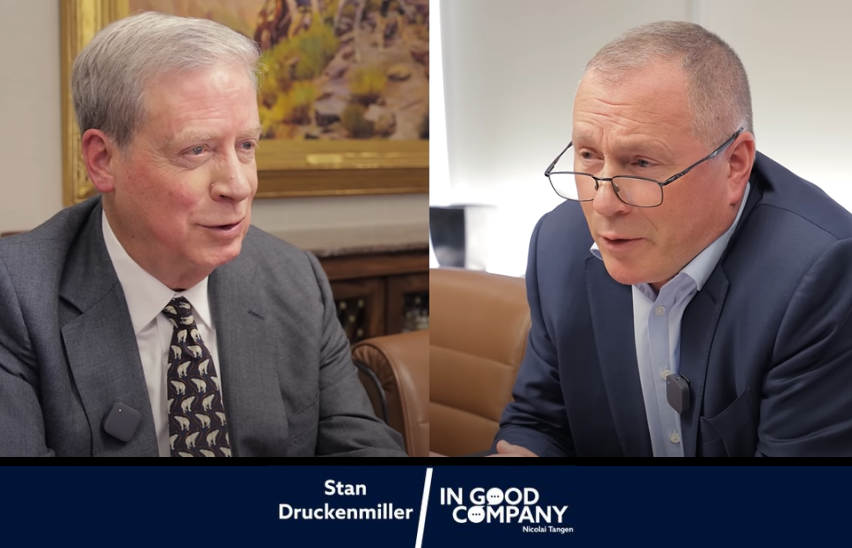
원본 유튜브/팟캐스트:
Stan Druckenmiller | Podcast | In Good Company | Norges Bank Investment Management - YouTube
https://shows.acast.com/622618c7057f3400120d15db/672b3724743b21a6147b0489
요약 및 정리:
Aurum님의 Norges Bank에서 스탠리 드러켄밀러 발표(24년 11월 6일)Moonlight (valley.town)
사회자:
What do you learn about sizing from Soros?
Soros로부터 포지션 크기에 대해 무엇을 배웠나요?
Stan Druckenmiller:
I don't know whether you know about, do you know baseball at all? Or would your listeners know about baseball?
야구에 대해 아시나요? 아니면 청취자들 아실까요?
사회자:
I don't play it, but.
저는 야구를 하지 않지만, 아마 알 것 같습니다.
Stan Druckenmiller:
When I went to Soros, I thought I would learn what would make Deutsche Mark go up and the yen go up. And modestly, I found I was better at that than him. In baseball terms, I had a very high batting average. He had a much higher slugging percentage. So what I learned from Soros is when you have conviction, you should bet really big. I know your listeners have probably heard it before, but probably the best illustration is the pound.
제가 Soros에게 갔을 때, 독일 마르크화와 엔화의 움직임에 대해 더 잘 알게 되리라 생각했어요. 그런데 놀랍게도 저는 그 부분에서는 그보다 더 나았습니다. 야구로 비유하자면, 저는 타율은 높았지만 Soros는 더 높은 장타율을 가지고 있었죠. 그에게 배운 점은, 확신이 있을 때는 크게 베팅해야 한다는 것이었어요. 청취자 여러분도 들어보셨겠지만, 아마도 파운드화가 가장 좋은 예가 될 거 같네요.

(이미지 출처: [1997 아시아 금융위기⑯] 영란은행 파괴자 - 오피니언뉴스 (opinionnews.co.kr))
(혹시, 조지소로스의 파운드화 공매도, 검은 월요일을 모르신다면, 다음 슈카님의 영상을 참고하시면 될 것 같습니다:
https://youtu.be/qNRzHXQkagc?si=0dHZO-KQ6SX0ZPjB)
사회자:
Yeah. So what happens? So let's go back. So you are in the office. What's happening in the UK?
네. 무슨 일이 일어났죠? 자자 다시 돌아가 보죠. 당신은 오피스에서 일했죠.. 영국에서 무슨 일이 일어났나요?
Stan Druckenmiller:
So I'm in the office in New York. And Scott Besant, who is a partner of mine in Europe, mainly trade, the European area, he's in London. And he tells me the London housing market is in big trouble and the British economy is in trouble because like most Anglo-Saxon economies at the time, it's very much driven by housing and so forth.
저는 뉴욕 사무실에 있었고, 제 파트너 중 한 명인 스콧 베산트가 유럽, 주로 유럽 지역에서 거래를 맡고 있었는데, 그는 런던에 있었습니다. 그가 런던의 주택 시장이 큰 어려움을 겪고 있으며 영국 경제도 곤경에 처했다고 전해왔습니다. 당시 대부분의 앵글로색슨 국가 경제가 주택 시장에 많이 의존했기 때문이죠.
사회자:
Just paint it out a bit. So your office, Are you like overlooking Central Park?
좀 더 자세히 설명해 주세요. 사무실에서 센트럴 파크가 보였나요?
Stan Druckenmiller:
I'm not overlooking Central Park, but I'm near it. I'm in the Soros office on the 32nd floor, but it's not a corner office. It's nothing fancy.
아니요, 중앙공원을 내려다보지는 않았지만 가까운 위치에 있었습니다. 저는 소로스 사무실의 32층에 있었지만, 코너 사무실도 아니고, 특별히 화려한 곳은 아니었어요.
사회자:
And the UK economy is going down the toilet.
그리고 영국 경제는 나락으로 떨어지고 있었죠.
Stan Druckenmiller:
We think the UK economy is going down, but I need to take you back about three years. When the Berlin Wall came down, it probably saved me my job because I probably would have fired at Soros six months after he went to Eastern Europe had the Berlin Wall not come down. But the Deutsche Mark went down for two days dramatically because the theory in the market was the Ostmark, which was the East German currency, was going to pollute the Deutsche Mark. I knew German history and knew they were obsessed with inflation because of Weimar Republic and then that led to Hitler and so forth and so on. So I knew the Germans were absolutely obsessed with inflation.I knew that bringing all these East Germans into the labor supply was going to cause a boom in the economy. So we were very bullish on the overall German economy, and we were very convinced that there is no way the Bundesbank would let inflation. So we were very convinced it would be accompanied by tight monetary policy. So we had shorted the Italian Lira successfully during that period.
우리는 영국 경제가 침체되고 있다고 생각하지만, (투자 자체 아이디어는) 약 3년 전으로 거슬러 올라가야 합니다. 베를린 장벽이 무너지지 않았다면 소로스가 동유럽에 간 지 6개월 만에 저는 해고되었을 것이었고 베를린 장벽이 무너진 덕분에 제 일자리를 구할 수 있었죠. 그때 독일 마르크화가 이틀 동안 급격히 하락했어요. 당시 시장의 이론은 동독의 화폐였던 오스트마르크화가 독일 마르크화에 악영향을 줄 거라는 것이었습니다. 그러나 저는 독일의 역사를 알고 있었고, 그들이 인플레이션에 집착하고 있다는 것을 알고 있었어요. 바이마르 공화국의 하이퍼인플레이션과 그로 인한 히틀러의 등장을 기억하고 있기 때문이죠. 그래서 독일인들이 인플레이션에 대해 극도로 신경 쓰고 있다는 것을 알고 있었어요. 동독 주민들이 노동력에 추가되면 경제에 호황이 올 거라고 생각했죠. 그래서 우리는 독일 경제에 대해 매우 긍정적으로 보고 있었고, 분데스방크가 인플레이션을 허용하지 않을 것이라는 확신이 있었습니다. 이 시기에 이탈리아 리라를 공매도하여 성공적인 수익을 냈죠.
So when Scott called me, we were already sort of on this Deutsche Mark journey we've been for a few years. And the British economy is going down and the two currencies are linked.
그래서 스콧이 저에게 전화했을 때, 우리는 이미 몇 년 동안 독일 마르크화에 대한 투자 여정을 진행하고 있었습니다. 그리고 영국 경제가 하락하는 가운데 두 통화가 연계되어 있었습니다.
사회자:
So it was a peg, right?
고정환율제(페그제)였던 거죠?
Stan Druckenmiller:
It was a peg. So I called and asked how much it would cost me to short the pound versus the Deutsche Mark for six months. It was a half a percent. I think the fund was around $7.5 billion at the time, quantum fund. And I decided to do an invest and then investigate position. So I did a billion and a half, or like 20%, 25% of the fund, short the pound, long the Deutsche Mark, figuring I'd probably lose a half percent because it's a peg and it won't break within six months. But I wanted the position on. Fast forward probably about five or six weeks, the day I believe was September 15th, not that I would remember, I read the Financial Times. And the head of the Bundesbank, now I'm sure I'm aged, but I'm pretty sure it was Stietmeier, has written an editorial in the Financial Times, basically in more proper language, but he's basically saying that the Deutsche Mark and the pound should no longer be linked. So I decide to take Duquesne and the quantum fund to 100% long the Deutsche Mark, short the pound, because it's still a half a percent, unbelievably.
맞아요, 고정환율제였습니다. 그래서 전화해서 영국 파운드화를 독일 마르크화에 대해 6개월 동안 공매도하려면 비용이 얼마나 드는지 물어봤어요. 비용은 0.5% 정도였습니다. 당시 펀드는 대략 75억 달러였고, 저는 “투자하고 나서 조사하자”는 방식을 취했습니다. 그래서 펀드 자산의 20~25%에 해당하는 15억 달러로 파운드화를 공매도하고 독일 마르크를 롱 포지션에 투자했습니다. 아마도 반 년 안에 고정환율제가 깨지지 않을 것이므로 0.5% 정도 손해를 볼 거라고 예상했지만, 그래도 포지션을 유지하고 싶었습니다. 그로부터 약 5~6주 후, 날짜는 아마 9월 15일이었을 겁니다. Financial Times를 읽는데, 분데스방크의 수장이 Financial Times에 사설을 썼더군요. 요점은 독일 마르크화와 파운드화가 더 이상 연계되지 않아야 한다는 것이었습니다. 그래서 저는 Duquesne과 Quantum 펀드를 100% 독일 마르크 매수, 파운드화 매도로 포지션을 확대하기로 결정했어요. 여전히 비용은 0.5%로 믿기 힘들 정도로 저렴했죠.
Now you're going to hear vintage Soros.So he happens to be in New York at the time, which he wasn't always. I go into his office and I explain to him why I'm going to 100%. And he had a rather large personal account. That's how we kept each other out of each other's hair.
이제 전형적인 Soros의 모습을 들려드리죠. 당시 그는 뉴욕에 있었는데 항상 뉴욕에 있었던 것은 아니었습니다. 저는 그의 사무실로 가서 제가 왜 100%로 가는지 설명했습니다. 그리고 그는 꽤 큰 개인 계좌를 가지고 있었습니다. 그렇게 해서 서로의 일에 관여하지 않았죠.
He traded that. And it was 90%, 95% overlap. I told him why I was doing this. And he had this unpleasant, puzzled look on his face when I'm telling him my thesis, that this one economy is booming and they need higher rates. This other economy is falling apart. They need lower rates. These two currencies shouldn't be linked. And I'm thinking, what does he not understand about this? Because this guy pretty much understood everything. And he says, "look, this is a one-way bet. They come along very, very rarely. It's ridiculous doing 100%. We should put 200% of the fund in this trade". So there you have it.
Soros는 그 거래를 했습니다. 우리 포지션은 90~95%가 겹쳤죠. 제가 왜 이 거래를 하는지를 설명했어요. 그런데 제가하나의 경제는 호황을 맞아 높은 금리가 필요하고, 다른 경제는 붕괴 직전이라 낮은 금리가 필요하니, 두 통화는 연계되어 있어서는 안 된다는 이야기를 설명하는 동안 그가 불쾌한 표정과 당황한 표정을 짓고 있었어요. 저는 이 사람은 거의 모든 것을 이해하는 사람인데, 왜 이걸 이해하지 못해서 저런 표정을 짓지라고 생각했어요. 그리곤 그가 말하길,“이건 일방적인 베팅이야. 이런 기회는 정말 드물지. 100%로 가는 건 말도 안 돼. 펀드의 200%를 걸어야 해.” 그래서 결국 그렇게 됐죠.
사회자:
So that means that you borrow money in the bank and double up.
그 말은 은행에서 돈을 빌려 두 배로 투자한다는 뜻이네요.
Stan Druckenmiller:
Yeah. On a $7.5 billion fund, he thought we should have $15 billion, short the pound, long the Deutsche Mark. It turns out we never got there. But it shows the way the man thinks. I saw it over and over again.
맞습니다. 75억 달러 펀드에 대해 150억 달러 규모로 파운드를 공매도하고 독일 마르크를 매수하는 것입니다. 물론 우리는 실제로 그 수준에 도달하지는 못했어요. 하지만 Soros의 사고방식을 보여주는 일화입니다. 그런 생각을 여러 번 봤어요.
사회자:
Because once you were trading, the thing happened.
트레이딩을 시작하자마자 바로 그 일이 벌어진 거군요
Stan Druckenmiller:
Yeah. Unfortunately, we had a pretty strong reputation. And when I started selling it that night, I noticed a lot of other hedge funds started selling it, the gossip community and the currency markets. And by midnight to 1 o'clock, the Fords had blown out. They'd started the day at 0.5%. They were like 6% or 7%. And it basically wasn't trading after 1 in the morning. Then the British raised rates, I think, from 6% to 9% to try and stop the bleeding. And then they went to 12%. I knew it was over. But the Fords were out so much, it didn't matter. And it was done by noon the next day.
네. 안타깝게 저희의 평판은 꽤 좋았습니다. 제가 그날 밤 매도를 시작하자 다른 헤지펀드들도 매도에 나섰고, 시장 소문이 빠르게 퍼졌습니다. 자정에서 새벽 1시쯤, 파운드의 선물 가격이 급등했어요. 하루를 0.5%로 시작했던 선물 가격이 6~7%로 올랐고, 새벽 1시 이후에는 사실상 거래가 중단되었습니다. 영국은 금리를 6%에서 9%로 올려 혈류를 막아보려고 했고, 그 후 12%까지 올렸어요. 그때 저는 이미 끝났다고 생각했죠. 선물 가격이 너무 높아서 상관이 없었고, 다음 날 정오에는 모든 것이 끝났습니다.
사회자:
And you were sitting at your desk looking at the Reuters screen?
그때 책상에 앉아서 Reuters 화면을 보고 계셨나요?
Stan Druckenmiller:
Yes, or whatever the screen at the time was. We only got $7.5 billion done, ironically. Well, I have to ask you- Had it not been for Soros, I probably would have not got to...

말 그대로 전설적인 투자자네요. 좋은 글 감사합니다.

감사합니다.