Trump Vows No Tariff Extension, Hardens Threats on Copper, Drugs
President Donald Trump vowed to push forward with his aggressive tariff regime in the coming days, stressing he would not offer additional extensions on country-specific levies set to now hit in early August while indicating he could announce substantial new rates on imports of copper and pharmaceuticals.
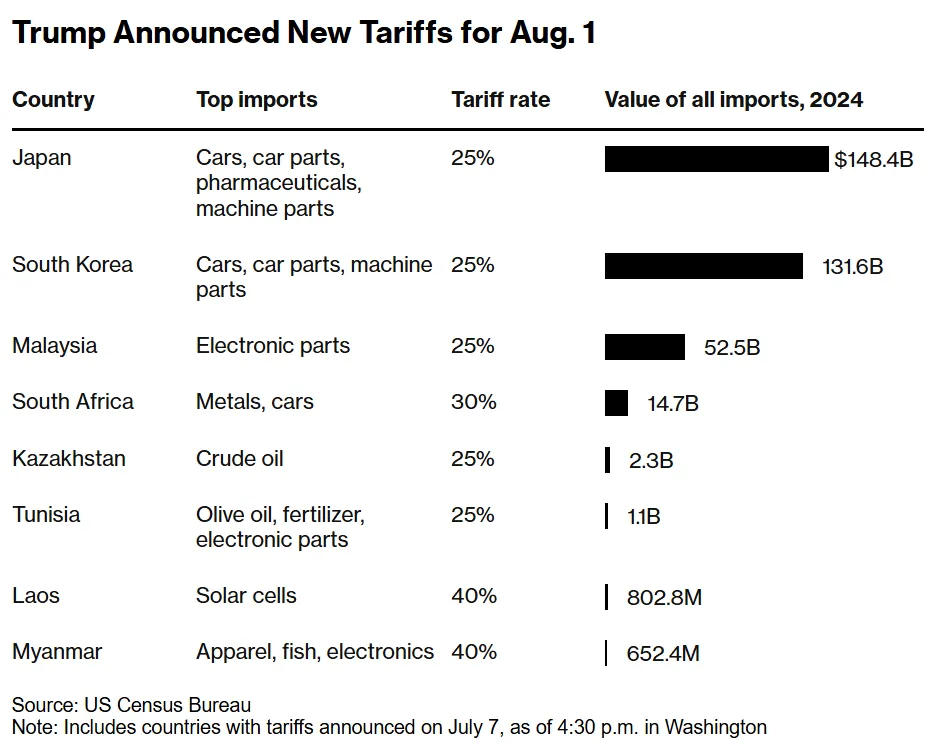
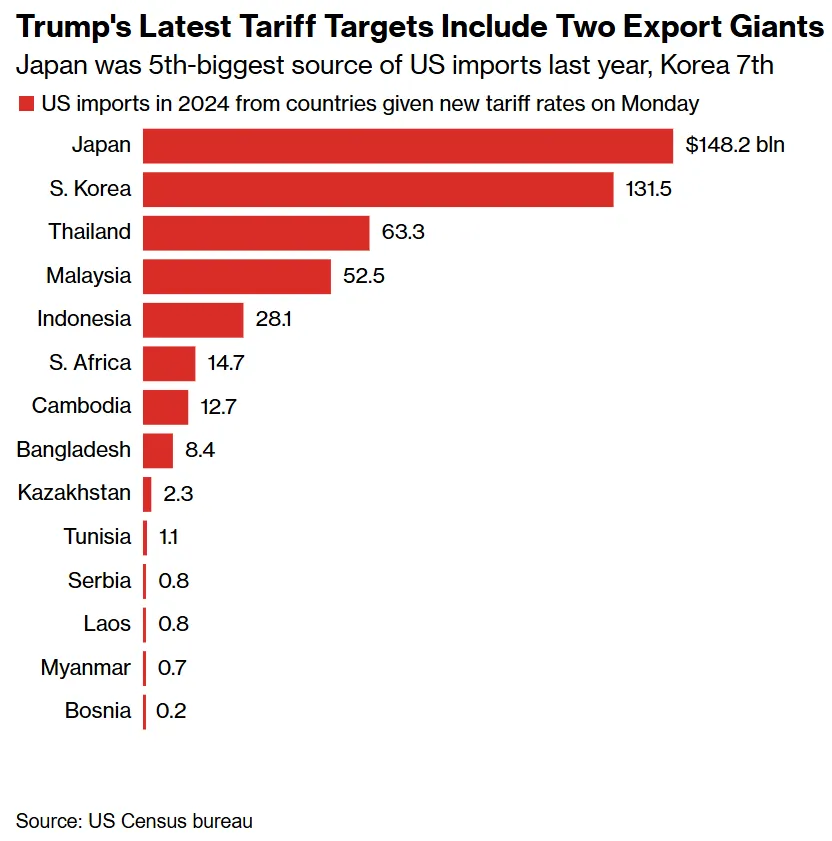
The posturing on social media and at a Cabinet meeting on Tuesday came after traders initially shrugged off a series of letters and executive actions Trump issued Monday, pushing back the deadline for his so-called “reciprocal” tariffs while announcing the latest rates he planned for more than a dozen countries that had not succeeded in brokering quick trade agreements.
That changed Tuesday as Trump signaled a renewed determination to push ahead with his plans to heavily tax foreign imports.
Trump said he would offer no additional delays on the country-specific tariffs, despite the previous night allowing he was “not 100% firm” on his August 1 deadline.
He said he would impose a 50% rate on copper products being sent into the US, surging futures of the commodity to their largest intraday gain in data going back to at least 1988.
He also told reporters that despite progress with the European Union on a trade deal, frustration over the bloc’s taxes and fines targeting US technology firms could result in him unilaterally declaring a new tariff rate within the next two days. And just hours after saying he was close to a trade deal with India, Trump said he would still tag imports from the country with an additional 10% levy for their participation in BRICS, a collection of developing nations.
도널드 트럼프 대통령은 다가오는 며칠 동안 자신의 공격적인 관세 정책을 추진하겠다고 맹세하며, 8월 초 발효될 예정인 특정 국가별 관세에 대한 추가 연장을 제공하지 않을 것이라고 강조했고, 구리 및 의약품 수입에 대한 상당한 신규 관세율을 발표할 수 있다고 시사했습니다.
화요일 소셜 미디어와 각료 회의에서의 이러한 태도 표명은 월요일 트럼프 대통령이 발표한 일련의 서한과 행정 명령에 대해 무역업자들이 처음에는 대수롭지 않게 여긴 후 나왔습니다. 이 명령들은 소위 "상호" 관세의 마감 기한을 연기하고, 신속한 무역 협상을 성공시키지 못한 십여 개 이상의 국가에 대해 계획된 최신 관세율을 발표한 것이었습니다.
화요일에 상황이 바뀌었고, 트럼프 대통령은 외국 수입품에 대한 중과세 계획을 추진하려는 새로운 결의를 보였습니다.
트럼프 대통령은 특정 국가별 관세에 대한 추가 지연은 없을 것이라고 말했지만, 전날 밤에는 8월 1일 마감 기한에 대해 "100% 확고하지 않다"고 말한 바 있습니다.
그는 미국으로 들어오는 구리 제품에 50%의 관세율을 부과할 것이라고 말했고, 이로 인해 해당 원자재의 선물 가격은 1988년 이후 가장 큰 일중 상승률을 기록했습니다.
그는 또한 기자들에게 유럽연합과의 무역 협상에 진전이 있었음에도 불구하고, 블록의 미국 기술 기업에 대한 세금 및 벌금에 대한 불만으로 인해 향후 이틀 내에 새로운 관세율을 일방적으로 선언할 수 있다고 말했습니다. 그리고 인도와의 무역 협상에 근접했다고 말한 지 불과 몇 시간 만에 트럼프 대통령은 개발도상국 모임인 BRICS 참여를 이유로 인도산 수입품에 10%의 추가 관세를 부과할 것이라고 말했습니다.
EU to Protect Airbus in US Trade Deal as Ferrari to Lose Out
As the European Union nears a trade deal with the US, its negotiators are focusing on protecting key industries from massive tariffs set to hit the bloc’s exports as soon as Aug. 1.
The European Commission, which handles trade matters for the EU, is closing in on a preliminary agreement that would exempt commercial aircraft from some tariffs in a potential boost to Airbus SE, according to people familiar with the matter. It would also create carve outs for some — mostly German — carmakers, giving relief to companies such as BMW AG and Mercedes-Benz Group AG.
Other carmakers such as Italy’s Ferrari NV may miss out on any benefits since the carve out may only help companies with factories in the US, Bloomberg reported earlier.
Which sectors are spared — spirits are also expected to receive a reprieve — speaks to the political leverage of key member states, which industries the EU views as critical, as well as areas where the US has a vested interest to protect its own manufacturers. In the case of Airbus, it’s a bit of all of those.
유럽연합(EU)이 미국과의 무역 협상에 근접하면서, EU 협상단은 8월 1일부터 발효될 예정인 대규모 관세로부터 EU 수출의 핵심 산업을 보호하는 데 집중하고 있습니다.
사안에 정통한 소식통에 따르면, EU의 통상 문제를 담당하는 유럽연합 집행위원회는 상업용 항공기를 일부 관세에서 면제하는 예비 합의에 근접했으며, 이는 에어버스(Airbus SE)에 잠재적인 활력이 될 수 있습니다. 또한 이 합의는 주로 독일 자동차 제조업체들을 위한 일부 예외 조항을 만들어 BMW AG와 메르세데스-벤츠 그룹 AG와 같은 기업들에게 부담을 덜어줄 것입니다.
블룸버그 통신은 이탈리아의 페라리(Ferrari NV)와 같은 다른 자동차 제조업체들은 이번 혜택을 받지 못할 수도 있다고 보도했습니다. 왜냐하면 이번 예외 조항은 미국 내 공장을 가진 기업에게만 해당될 수 있기 때문입니다.
어떤 부문이 면제되는지(주류 또한 유예를 받을 것으로 예상됨)는 주요 회원국의 정치적 영향력, EU가 중요하게 여기는 산업, 그리고 미국이 자국 제조업체를 보호하기 위해 기득권을 가지고 있는 분야를 보여줍니다. 에어버스의 경우, 이 모든 것이 복합적으로 작용하고 있습니다.
Supreme Court Lets Trump Proceed With Broad Workforce Cuts
The US Supreme Court let President Donald Trump move ahead with plans to dramatically reduce the size of the federal government, lifting a court order that had blocked 19 federal departments and agencies from slashing their workforces.
Granting a Trump request over one dissent, the justices on Tuesday cleared the administration to implement Trump’s Feb. 11 executive order, which opponents say could cause hundreds of thousands of federal workers to lose their jobs. The Supreme Court decision will apply while litigation goes forward.
In an unsigned order, the court said the administration is likely to succeed in arguing that Trump’s executive order and a joint memo from the Office of Management and Budget and Office of Personnel Management were lawful. But the justices made clear they weren’t taking a position at this stage on whether individual agency plans for how to carry it out would pass legal muster.
Justice Ketanji Brown Jackson dissented, writing that a California federal judge’s “temporary, practical, harm-reducing preservation of the status quo was no match for this court’s demonstrated enthusiasm for greenlighting this president’s legally dubious actions in an emergency posture.”
미국 대법원이 도널드 트럼프 대통령의 연방 정부 규모 대폭 축소 계획을 진행하도록 허용하면서, 19개 연방 부처 및 기관의 인력 감축을 막았던 법원 명령을 해제했습니다.
대법관들은 트럼프 대통령의 요청을 한 명의 반대에도 불구하고 승인하여, 트럼프 대통령의 2월 11일 행정 명령을 시행하도록 행정부에 허가했습니다. 이 행정 명령은 반대자들에 따르면 수십만 명의 연방 공무원이 일자리를 잃게 할 수 있다고 합니다. 이번 대법원 결정은 소송이 진행되는 동안 적용됩니다.
서명 없는 명령에서 법원은 트럼프 행정 명령과 예산 관리국 및 인사 관리국 공동 메모가 합법적이라는 주장에서 행정부가 승소할 가능성이 높다고 밝혔습니다. 그러나 대법관들은 이 단계에서 개별 기관이 이를 실행하는 계획이 법적으로 문제가 없는지에 대해서는 입장을 취하지 않는다는 점을 분명히 했습니다.
케탄지 브라운 잭슨 대법관은 반대 의견을 내며, 캘리포니아 연방 판사의 "일시적이고 실질적이며 피해를 줄이는 현상 유지는 이 법원이 비상 상황에서 이 대통령의 법적으로 의심스러운 행동을 승인하는 데 보여준 열정에 미치지 못했다"고 썼습니다.
Although the high court order isn’t designed to be the final word in the case, it marks a significant milestone in Trump’s campaign to transform the federal workforce. The affected agencies include the Health and Human Services Department, Internal Revenue Service, Veterans Affairs Department, Labor Department, Energy Department and Environmental Protection Agency.
It’s the second time the Supreme Court has backed Trump in a mass firing case, following an April 8 decision that meant the administration didn’t have to reinstate employees in six government departments. The high court is still weighing a separate administration request to resume dismantling the Department of Education.
대법원의 이번 명령이 해당 사건의 최종 결정은 아니지만, 트럼프 대통령이 연방 인력을 개편하려는 캠페인에서 중요한 이정표가 됩니다. 영향을 받는 기관으로는 보건복지부, 국세청, 재향군인부, 노동부, 에너지부, 환경보호국 등이 포함됩니다.
이번 결정은 대량 해고 사건에서 대법원이 트럼프 대통령의 손을 들어준 두 번째 사례입니다. 앞서 4월 8일에는 행정부가 6개 정부 부처의 직원들을 복직시킬 필요가 없다는 결정이 내려진 바 있습니다. 대법원은 교육부 해체를 재개하려는 트럼프 행정부의 별도 요청에 대해서도 여전히 검토 중입니다.
Floor Traders Want Their Seats Back
Floor traders
Trading floors used to be natural monopolies. Some brokers get together and start trading stocks with each other under one particular tree, or in one particular coffeehouse, and they keep coming back every day; over time they get themselves a dedicated exchange building with a comfortable trading floor where they can meet and trade stocks. If you are a broker with stock to sell, you will naturally go to the exchange with the most potential buyers; if you are a broker who wants to buy stock, you will naturally go to the exchange with the most sellers. If you dislike something about the exchange — if you think the room is too drafty or the other brokers are unfriendly or the rules discriminate against you — well, tough. You could go across the street and start a new exchange, but that’s hard to do, because everyone wants to be where everyone is. If it’s just you across the street, who will want to trade with you?
In an important sense, the rise of electronic trading did not change this. People still want to be where the liquidity is; people still want to send their orders to the electronic venue where all the other orders are. But in an important sense it did. Old-school trading floors were floors, where brokers stood, and a broker could only stand in one place at a time. Electronic trading venues are just computer servers and communications protocols, and you can more or less connect your computer to as many other computers as you want. If one big exchange almost always has the most orders and the best prices, you will do most of your trading there, but if another small exchange occasionally has better prices, you can send some orders there when its prices are good. You don’t have to choose to stand only in the best location; you can stand everywhere at once. An exchange with a good product or a good idea can win market share gradually; incumbency is not quite as powerful an advantage as it once was.
When trading floors were (1) natural monopolies and (2) literal floors, there were only a limited number of spots on the floor, and those spots were hugely valuable. (The spots were generally called “seats,” even though the brokers rarely sat down.) People who did not have spots on the trading floor had to do their trading through people who did; the people who did have spots had the first crack at orders. The exchanges were not, originally, businesses; they were membership organizations run by and for their members, the people with spots on the floor. The seats became valuable assets: Members could pass them on to their colleagues or children, or sell them for large amounts of money.
Eventually (1) the exchanges mostly became for-profit businesses and went public and (2) trading moved to electronic venues. What does that mean for the value of those seats? There is some argument that the answer is “the seats became much more valuable”: Electronic trading made the big exchanges bigger, increased volumes, and made it more important for global firms to connect to them. If only 100 people can trade on an exchange, then owning one of those 100 slots is more valuable as the exchange gets bigger and more central.
But there is also an argument that the answer is “the seats became worthless”: Electronic trading eliminated the constraint on how many people could trade on the exchange, so if more people wanted spots then more spots could just be created. And electronic trading also undermined the monopoly status of exchanges, so if exchanges didn’t create more spots, they would lose business...