European allies back Ukraine’s borders after Donald Trump floats land swap with Russia
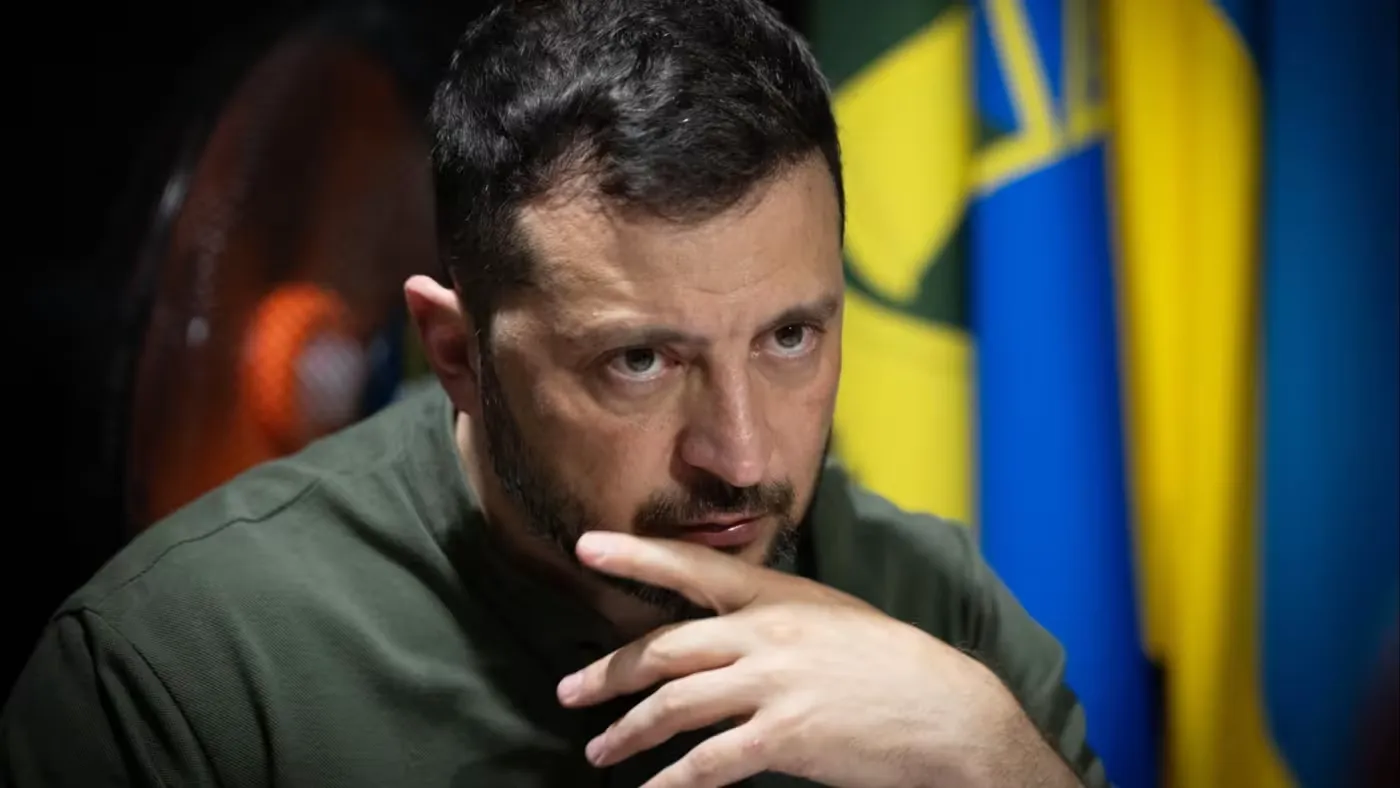
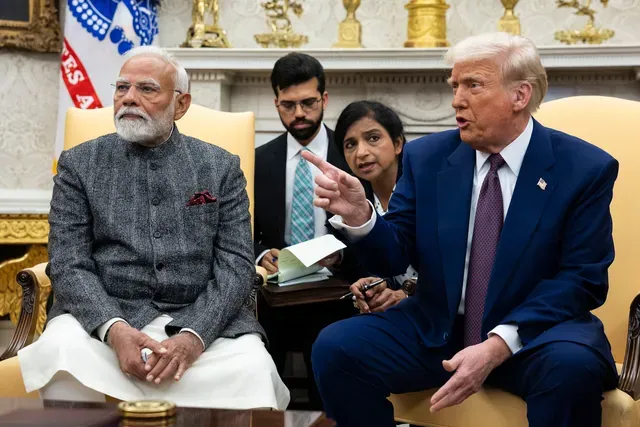
European leaders declared that Ukraine’s border “must not be changed by force” after Volodymyr Zelenskyy appealed for allies to oppose a peace deal floated by Donald Trump that could involve “some swapping of territory”.
In a joint statement, leaders from the European Commission, France, Italy, the UK, Poland and Finland said “the current line of contact should be the starting point of negotiations”.
They said “the path to peace in Ukraine cannot be decided without Ukraine”, ahead of a meeting next week between the US president and Russian President Vladimir Putin.
유럽 지도자들은 볼로디미르 젤렌스키 대통령이 “일부 영토 교환”을 포함할 수 있는 도널드 트럼프가 제기한 평화 협정에 반대해 달라고 동맹국들에 호소한 후, 우크라이나의 국경은 “무력으로 변경되어서는 안 된다”고 선언했다.
유럽연합 집행위원회, 프랑스, 이탈리아, 영국, 폴란드, 핀란드 지도자들은 공동 성명에서 “현재의 접촉선이 협상의 출발점이 되어야 한다”고 밝혔다.
이들은 다음 주 미국 대통령과 러시아 대통령 블라디미르 푸틴 간의 회담을 앞두고 “우크라이나의 평화로 가는 길은 우크라이나 없이 결정될 수 없다”고 말했다.
이건 당연히 유럽 입장에선 우크라이나 단일 건이 아니기 때문에 결사 반대
당사자 합의 없이 마무리지으면 자기들도 이후에 똑같이 당할 수 있거든
그리고 미국이랑 러시아가 타국의 주권을 합의로 끝내도 되는 존재임을 인정하는 것이기도 해서
유럽 입장에선 용납 불가
The futile loneliness of a crypto short
I’m a financial historian, and one of the hazards of my profession is that sometimes people ask me what I do. I tell them and watch them back away slowly, hoping to bump into someone, anyone else. I have noticed a charming exception, however: crypto dads. They have tasteful haircuts and good manners. They read history and think about money and want to talk to me.
I am genuinely happy to talk to crypto dads. I have dad energy myself. I think financial history is fascinating and they do, too. I keep hitting a wall in these conversations, though, and it comes down to epistemology — how we know what we know, and how we know that it’s true.
To them, an idea can be tested with a bet. If it pays off, they were right. I don’t think that way and I don’t make bets. This means we always end up with an exchange where I say something like, “over the long run you can’t force people to use a deflationary currency; they either come up with a local workaround or they revolt”.
Then they will say something like, “but bitcoin keeps climbing in value over the long run, so you’re missing something markets see, because it’s working”. Under their epistemology, this is correct. So that’s where we wrap it up, two well-meaning dads talking past each other.
I suspect they’re working from an idea by the financier and philosopher Nassim Nicholas Taleb, who has argued that opinions without financial risk are meaningless — you can’t truly believe something unless you have skin in the game. I do not wish to do battle with Taleb in any arena and am frankly terrified to have invoked his name here.
Skin in the game is a useful construct. I often wish, for example, that the people who design car seats for children were forced to install and uninstall their own car seats every day, in the rain, while sleep deprived, forever. But I have found it difficult to apply skin in the game to crypto.
First, it’s possible that something can be a very good trade but very bad for a lot of people. Second, risk aversion is hard to structure as a winning trade. Third, I am metaphorically short crypto but I am not literally short crypto, because you can wait a long time and lose your house before a short pays off.
There are lots of different kinds of crypto — bitcoin is not a stablecoin and neither of them is a memecoin. The crypto sector is so broad that I have come to think of all of it together as “finance as if the past never happened”.
Bitcoin, for example, rests on the assumption that the best monetary standards have been hard and limited, and that a slow, constant deflation is ideal. This has been true, historically, for two groups of people: merchants who trade in low-trust environments across oceans, and creditors who benefit when old loans pay off in more valuable amounts. For everyone else, hard deflationary standards have been a grinding punishment.
Administrators in the early modern Italian city states understood the challenge of deflation. They kept hard gold florins and ducats for long-distance trade but managed their own lightly inflationary silver standards for petty trade at home. American colonists in the 18th century developed their own paper bills of credit — some a little inflationary, some a lot — as a compromise between the hard sterling standard in trade with London and the need to handle small purchases at home. Barry Eichengreen, the best-known historian of the modern gold standard, has argued that it was democracy that ended the regime. In other words: most people hated the gold standard.
Today, bitcoin does seem to work as a currency for some international transactions, particularly in developing countries. That could be good, but it’s hard to tell which transactions are wealth preservation, which ones are tax evasion and which ones are capital flight. If I were a betting man I’d buy bitcoin, and you’re welcome to it. But I’m not a betting man, I’m an American academic who worries about deflation, and all I want is for bitcoin to stay the hell away from the dollar. That’s an argument, but I don’t think it’s a trade.
Similarly, I think the new US stablecoin law returns us to a 19th-century regulatory regime for dollars, where there’s no national deposit insurance and states race to the bottom with their regulations to attract business. How do I trade on my sense of doom? I can tell you about 1837, when paper bank notes failed, or 1932, when bank deposits failed. But I can’t tell you what year it is now. Is it 1825, in an expanding economy with room to run, or is it 1836?
Early in my career I worked for Swiss Re, a reinsurer full of smart people who structured trades under the assumption that disasters happened but it was impossible to know when. I have always liked that approach, but the recent history of reinsurance has been of chancers from Wall Street, stepping in for premiums without an appreciation for disaster.
I don’t have the capital to wait out a long-term bet like a reinsurer and then laugh at the chancers. I’m just a dad, worried, standing in front of another dad, who is not.
저는 금융 역사가인데, 제 직업의 위험 중 하나는 사람들이 가끔 제가 무슨 일을 하는지 묻는다는 것입니다. 제가 하는 일을 말해주면 그들이 천천히 뒷걸음질 치는 것을 보게 되는데, 그들은 누구든 다른 사람과 마주치기를 바랍니다. 하지만 저는 한 가지 매력적인 예외를 발견했습니다: '암호화폐 아빠'들입니다. 그들은 깔끔한 머리 모양과 좋은 매너를 갖추고 있습니다. 그들은 역사를 읽고 돈에 대해 생각하며 저와 이야기하고 싶어 합니다.
저는 암호화폐 아빠들과 이야기하는 것이 진심으로 즐겁습니다. 저에게도 아빠 에너지가 있습니다. 저는 금융 역사가 매혹적이라고 생각하고 그들도 마찬가지입니다. 하지만 저는 이 대화에서 항상 벽에 부딪히는데, 그것은 인식론, 즉 우리가 아는 것을 어떻게 알고 그것이 사실임을 어떻게 아는가에 대한 문제로 귀결됩니다.
그들에게 아이디어는 내기를 통해 시험될 수 있습니다. 내기가 성공하면 그들이 옳았다는 것입니다. 저는 그런 식으로 생각하지 않고 내기를 하지 않습니다. 그래서 우리는 항상 다음과 같은 대화를 나누게 됩니다. 제가 “장기적으로 사람들에게 디플레이션 통화를 강요할 수는 없습니다. 그들은 지역적인 해결책을 찾거나 반란을 일으킬 것입니다”라고 말합니다.
그러면 그들은 “하지만 비트코인은 장기적으로 가치가 계속 상승하고 있으니, 당신은 시장이 보는 것을 놓치고 있는 것입니다. 왜냐하면 그것은 작동하고 있으니까요”라고 말합니다. 그들의 인식론에 따르면 이것은 옳습니다. 그래서 우리는 서로를 이해하지 못한 채 대화를 마무리하게 됩니다. 두 명의 선의의 아빠가 서로 엇갈린 이야기를 하는 것입니다.
저는 그들이 금융인이자 철학자인 나심 니콜라스 탈레브의 아이디어에 따라 생각하고 있다고 짐작합니다. 그는 금전적 위험이 없는 의견은 의미가 없다고 주장했습니다. 즉, '판돈을 걸지 않는 한' 무언가를 진정으로 믿을 수 없다는 것입니다. 저는 어떤 분야에서도 탈레브와 싸우고 싶지 않으며, 솔직히 여기서 그의 이름을 언급한 것만으로도 겁이 납니다.
'판돈 걸기(Skin in the game)'는 유용한 개념입니다. 예를 들어, 저는 아동용 카시트를 디자인하는 사람들이 매일, 비가 오는 날에도, 잠이 부족한 상태에서, 영원히 직접 카시트를 설치하고 제거하도록 강요받았으면 좋겠다고 자주 생각합니다. 그러나 암호화폐에는 '판돈 걸기'를 적용하기 어렵다는 것을 알게 되었습니다.
첫째, 어떤 것이 매우 좋은 거래일 수 있지만 많은 사람들에게는 매우 나쁜 것일 수 있습니다. 둘째, 위험 회피는 성공적인 거래로 구성하기 어렵습니다. 셋째, 저는 은유적으로 암호화폐에 대해 '숏 포지션'을 취하고 있지만, 문자 그대로 암호화폐에 대해 숏 포지션을 취하지는 않습니다. 왜냐하면 숏 포지션이 성과를 내기 전에 오랫동안 기다리다가 집을 잃을 수도 있기 때문입니다.
암호화폐에는 다양한 종류가 있습니다. 비트코인은 스테이블코인이 아니며, 둘 다 밈코인이 아닙니다. 암호화폐 부문은 너무 광범위해서 저는 이 모든 것을 “과거가 한 번도 없었던 것 같은 금융”으로 생각하게 되었습니다.
예를 들어, 비트코인은 최고의 통화 기준은 견고하고 제한적이었으며, 느리고 꾸준한 디플레이션이 이상적이라는 가정에 기반하고 있습니다. 역사적으로 이것은 두 그룹의 사람들에게만 해당되었습니다. 즉, 대양을 가로질러 신뢰도가 낮은 환경에서 거래하는 상인들과, 오래된 대출금이 더 가치 있는 금액으로 상환될 때 이익을 얻는 채권자들입니다. 다른 모든 사람들에게 견고한 디플레이션 기준은 가혹한 처벌이었습니다.
근대 초기 이탈리아 도시 국가의 행정가들은 디플레이션의 어려움을 이해했습니다. 그들은 장거리 무역을 위해 견고한 금 플로린과 두카트를 유지했지만, 국내의 소액 거래를 위해 약간의 인플레이션을 유발하는 자체 은화 기준을 관리했습니다. 18세기 미국 식민지 주민들은 런던과의 무역에서 견고한 스털링 표준과 국내의 소액 구매를 처리해야 하는 필요성 사이의 절충안으로, 자체적인 지폐(일부는 약간의 인플레이션, 일부는 많은 인플레이션)를 개발했습니다. 현대 금본위제의 가장 잘 알려진 역사학자인 배리 아이켄그린은 민주주의가 이 제도를 종식시켰다고 주장했습니다. 즉, 대부분의 사람들이 금본위제를 싫어했다는 것입니다.
오늘날 비트코인은 특히 개발도상국에서 일부 국제 거래의 통화로 작동하는 것처럼 보입니다. 이것은 좋은 일일 수 있지만, 어떤 거래가 재산 보존이고, 어떤...