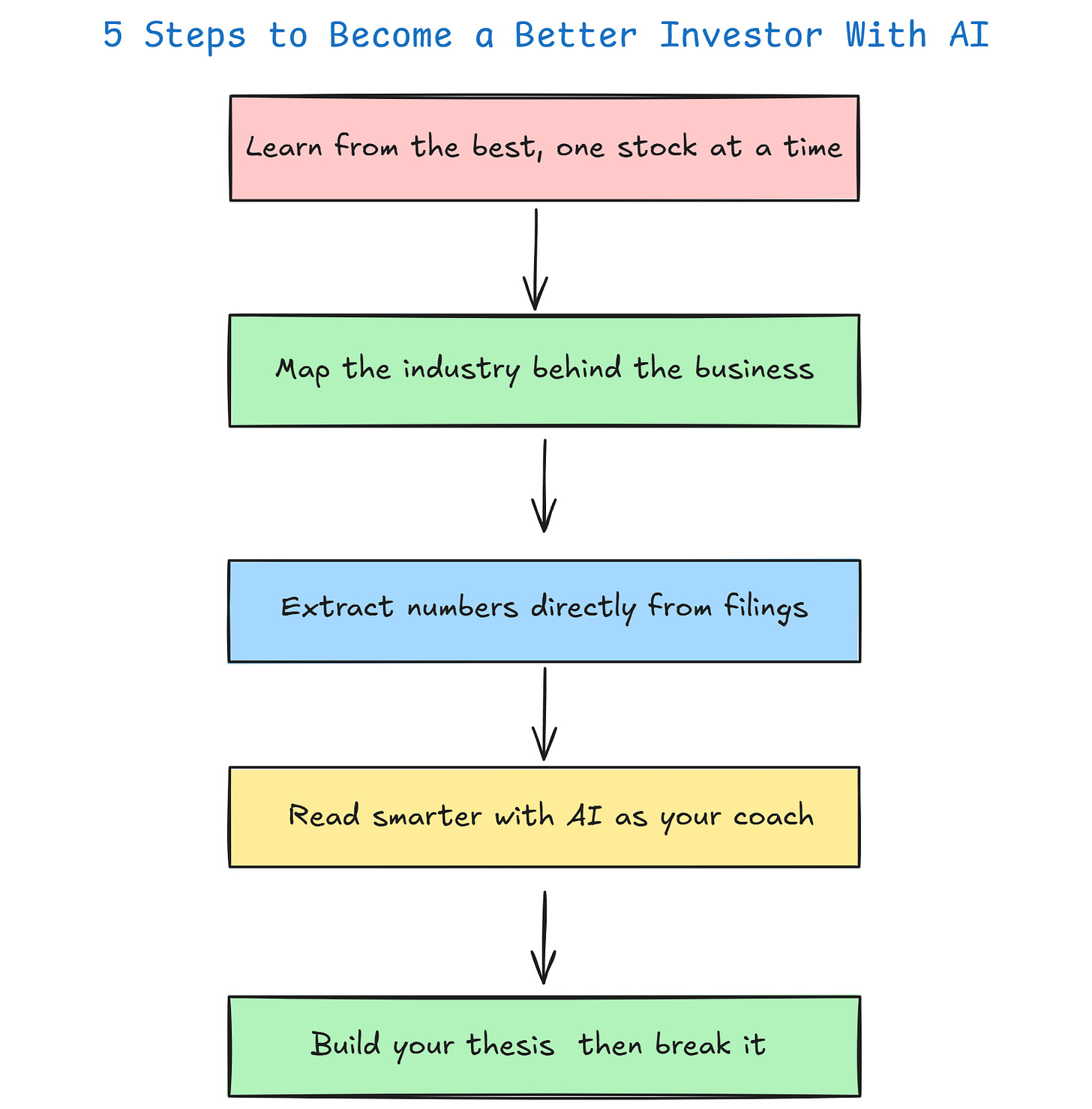
안녕하세요, 동료 주식 선택자 여러분
어제 헤비 모트 인베스트먼트가 서브스택에 질문했습니다: "주식 거래 산업에 대한 좋은 입문서가 있나요?"
저는 업계에 대해 잘 몰랐기 때문에 빨리 배우고, 유용한 것을 만들고, AI로 사용한 정확한 단계를 보여 주어야 한다는 도전을 스스로에게 부여했습니다.
일반적인 방법으로는 주말 내내 걸립니다.
AI를 사용하면 20분으로 단축할 수 있습니다.
저는 이 프로세스를 증권 거래소 부문에서 실행했습니다. 다음은 복사할 수 있는 플레이북입니다:
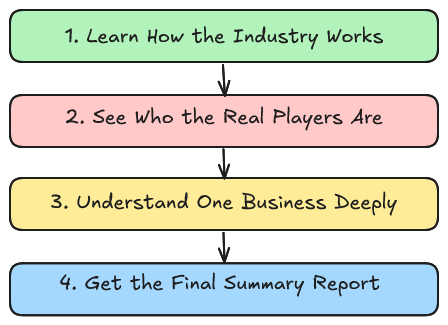
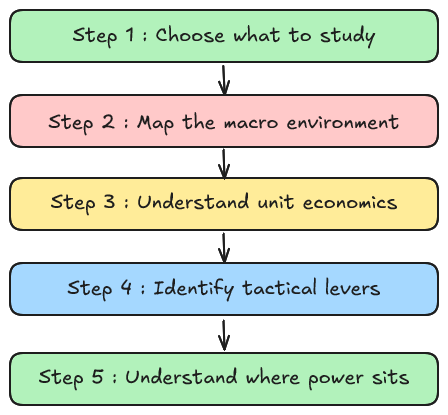
1단계: 산업 작동 방식 이해하기
제가 항상 가장 먼저 하는 일은 개별 기업을 살펴보기 전에 산업 전반에 대한 아이디어를 얻는 것입니다.
바로 이 지점에서 AI가 일을 훨씬 쉽게 만들어줍니다.
LLM(대규모 언어 모델)의 DeepSearch 기능(저는 Gemini를 선호합니다)은 보고서를 찾아 요약하고 기본 사항을 설명하는 데 아주 유용합니다.
물론, 가끔은 수치를 틀리게 제시할 수도 있지만, 이 단계에서는 크게 중요하지 않습니다. 중요한 것은 빠르게 맥락을 파악하는 것입니다.
제가 요청하는 내용은 다음과 같습니다:
무엇을 이해하고 싶은지 설명합니다.
검색 범위를 설정합니다(공시 자료, 규제 기관 등).
원하는 출력 형식을 모델에 정확하게 알려줍니다.
다음은 제가 실제로 사용하는 프롬프트입니다.
ROLE
Senior equity analyst. Produce a €10k-grade sector dossier. No speculation. Zero hallucinations. All facts verifiable via high-quality sources.
INPUT
{SECTOR_NAME} for example stock exchange industry 산업 입력
OBJECTIVE
Go from zero to expert on {SECTOR_NAME}: revenue model, growth drivers, cost/margins, constraints, regulation, comps, risks. Deliver a 1-page executive summary + full report with charts and compact data tables.
SOURCE POLICY (STRICT)
Priority A→E:
A) Primary filings & IR (10-K/20-F/URD/S-1, audited IFRS/GAAP, investor days, official transcripts via EDGAR/ESMA/SEDAR+/etc.)
B) Regulators/statistics/multilaterals (SEC, ESMA, OECD, IMF, BIS, IEA/IRENA, ITU, national stats offices)
C) Trade associations with transparent methods
D) Tier-one journals/consultancies disclosing primary data
E) Official exchanges/data vendors (WFE, ICE, LME, S&P Global, Refinitiv) with methodology
Disallowed: SEO blogs, AI-generated pages, anonymous posts, vendor marketing without data, unsourced market sizes, Wikipedia for facts.
RETRIEVAL GUARDS
- Recency bias ≤24 months; older “Legacy” items only if seminal.
- Prefer {REGION}; else Global with regional splits.
- De-dupe. Use latest amended versions.
- If evidence missing: write “Insufficient high-quality evidence” + TODO.
NUMERIC FACT-CHECK PROTOCOL (MANDATORY)
Before outputting any number:
1) Record value, unit, period.
2) Verify against ≥2 independent A–D sources. If not possible, label “Single-source (Low confidence)”.
3) Run sanity checks: order-of-magnitude vs peers/sector; unit conversions correct; time period consistent.
4) If conflict >5%, state both figures, sources, and reason for variance.
5) If uncertain: do not estimate. Mark “Unknown”.
DEFINITION FIRST
- Define {SECTOR_NAME}, subsegments, value chain, buyer types.
- Map to NAICS/NACE/ICB/GICS; list synonyms and boundary cases.
- If ambiguous, present options, select consensus definition, justify briefly.
SEARCH PLAN (EXECUTE)
- Boolean queries with synonyms, codes, “site:” filters for A–E.
- Pull filings of top players; regulator rulebooks; trade-body yearbooks.
SOURCE LIST (COMPACT)
- Cap at 10–15 core sources.
- Present as a simple table (Title | Org | Type A–E | Date | Region | Link | Confidence High/Med/Low).
- No JSON. No page-by-page dump.
ANALYTICAL FRAMEWORK
5.1 Revenue model
- Who pays, why; pricing archetypes; sales motion; contract terms; switching costs; seasonality.
- Unit economics: ARPU/volume/utilization/churn; key sensitivities.
5.2 Growth drivers
- Structural vs cyclical; adoption curves; penetration vs TAM/SAM/SOM with defendable numbers.
- 5–10y scenarios with explicit assumptions and a simple tornado/sensitivity.
5.3 Cost structure & margins
- COGS vs Opex (labor, inputs, infra, compliance).
- Margin stack: Gross→EBITDA→EBIT→FCF; operating-leverage drivers; historical shifts.
5.4 Constraints to scale/margin expansion
- Technical bottlenecks, capex intensity, WC needs, supply chain, distribution, CAC, standards/interoperability, talent.
5.5 Regulation & exogenous factors
- Licenses; data/privacy/safety; environmental rules; trade/tariffs; upcoming proposals and likely timing/impact.
5.6 Benchmarks (peers)
- Table of 5–10 companies: model archetype, geography, revenue mix, margin range, capex %, FCF conversion, ROCE/ROIC, leverage.
- Cite latest audited period.
5.7 Risk register
- 8–12 risks with likelihood/impact, leading indicators, mitigants.
VISUALS
- Include clean CSV-ready tables used for each figure.
- Required figures: value chain map; revenue model schematic; cost stack + margin bridge; market size/penetration over time; scenario tornado.
- No code blocks unless asked. Keep charts reproducible from provided tables.
OUTPUT FORMAT
Page 1 — Executive Summary (≤300 words):
- What the sector sells, who pays, why now
- 3–5 growth drivers
- Margin outlook
- 3 key risks
- List of figures
Main Report:
- Sections 5.1–5.7. Use minimal in-text footnotes like [1], [2] linking to the Source List.
Appendices:
- A) Source List table (10–15 items, links only)
- B) Glossary
- C) Assumptions & Methods
- D) Data tables (CSV-ready)
QUALITY BAR
- Zero unsupported claims. Prefer “Unknown” over guessing.
- Show data vintage and units; convert to {CURRENCY} if provided; add FX note/date.
- Tag each section with Confidence High/Med/Low + one-line rationale.
- End with “Next Research Steps” to close evidence gaps.
BEGIN
1) Sector definition, subsegments, code mappings with 2–3 top sources.
2) Source List table (max 15).
3) Executive Summary, then full report using the fact-check protocol.
그 결과 보통 20페이지 이상의 상세 보고서가 작성됩니다.
지금 다 읽지 마세요. 그냥 보관하세요.
이 단계에서 중요한 것은 한 페이지 분량의 요약본입니다.
큰 보고서는 나중에 4단계에서 모든 내용을 하나로 묶을 때 유용하게 사용할 수 있습니다.
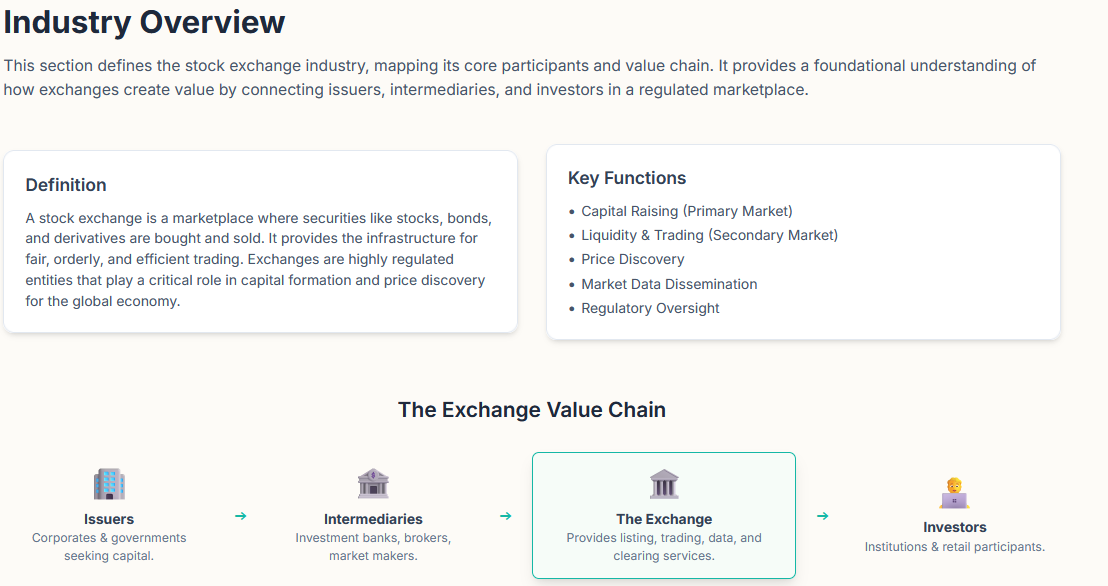
2단계: 진짜 경쟁자가 누구인지 파악하기
산업이 어떻게 돌아가는지 이해했다면, 다음 단계는 주요 기업들이 누구이며, 어떻게 경쟁하는지 알아보는 것입니다.
이 지점에서 투자자들이 종종 길을 잃습니다.
LSEG, Deutsche Börse, Euronext, ICE, Nasdaq 같은 이름들은 알고 있지만, 현실에서 거래소들은 "전반적으로" 경쟁하는 것이 아닙니다. 그들은 각자의 영역에서 경쟁합니다.
어떤 곳은 현물 거래(경매, 호가 시장)를 주도합니다.
다른 곳들은 청산(clearing)에서 대부분의 수익을 올립니다.
또 다른 곳들은 사실 거래소의 탈을 쓴 데이터 및 지수 사업체입니다.
이들을 제대로 구분해서 비교하지 않으면, 각 기업의 마진, 성장, 해자가 왜 그렇게 다르게 보이는지 놓치게 됩니다.
그렇기 때문에 저는 이 단계에서 다음을 위한 프롬프트를 사용합니다.
영역별로 기업들을 분류합니다(현물, 파생상품, 데이터/지적 재산, 청산 등).
고객이 이들을 선택하는 이유를 설명합니다(유동성, 수수료, 속도, 브랜드, 규제).
차별점과 해자를 강조합니다(네트워크 효과, 지수 연동, 중앙청산소(CCP)의 이점).
전환 비용을 보여줍니다(발행사, 중개인, 자산 운용사가 쉽게 옮겨가지 못하는 이유).
제가 사용하는 프롬프트는 다음과 같습니다.
ROLE
Market-structure analyst for long-term investors. Produce an investor-grade, qualitative-first dossier....