The Aug. 1 deadline for Trump's 50% copper tariffs signals the endgame for the most profitable trade that industry veterans say they have ever seen.
트럼프 대통령의 50% 구리 관세 부과 기한인 8월 1일은 업계 베테랑들이 "전례 없는 수익"이라고 입을 모았던 거래의 마지막 장을 예고하고 있습니다.
The phone calls started within days. In late February, President Donald Trump ordered a probe to potentially tariff copper imports. Almost immediately, China’s top metals bosses began receiving inquiries from some of the biggest Western commodity traders — companies that for decades have played a key role in supplying metal to feed the factories, construction sites and power grids of the world’s top consumer of raw materials.
But now instead of selling copper to China, the traders wanted to buy from it. Lots of copper, as soon as possible. They were willing to pay big money to get it. They even offered to pay their Chinese customers sizable amounts if they would cancel their obligations to supply them, freeing up that copper too.
On the morning of Feb. 28, the containership President Reagan departed Shanghai, carrying 716 tons of copper owned by Hartree Partners LP that was destined for Los Angeles. It was one of the first in a series of trades that left industry veterans stunned, as containers stacked with heavy slabs of copper that had just traveled halfway around the world, from smelters in Chile’s Andes mountains to China’s east coast, were hurriedly sent back across the Pacific toward ports in the US. Some cargoes hadn’t even been unloaded yet before the order was given to ship out again.
And the traders were only getting started. Trump’s probe fired the starting gun on a massive movement of metal that has redrawn the global market, as surging US prices made it hugely profitable to ship copper into the country — at least until the tariffs arrive. Some traders describe deals yielding more than $1,000 on every ton of copper, an unprecedented sum in an industry where a good trade rarely nets $100.
David Lilley, a 30-year industry veteran whose career spans physical trading, hedge-fund investing and management of US copper processing plants, said that he’s never seen anything like it.
“It was the best physical trading opportunity I have seen,” said Lilley, who now runs specialist metals hedge fund Drakewood Capital Management and no longer trades in physical markets. “A number of merchants captured it very effectively.”
The arbitrage trade has sucked hundreds of thousands of tons into US ports, some of which is now piling up outdoors on wharves along the Gulf Coast as traders hunt for space in bulging warehouses. New Orleans, the industry’s main storage hub for copper in the US, has become the focal point of the entire global market, leaving China and the rest of the world dangerously short of inventory. The London Metal Exchange’s copper contract spent most of last month gripped by a mounting supply squeeze.
Now, the endgame is approaching, after Trump said this week he will impose 50% tariffs on copper imports starting from Aug. 1. The news sent US prices spiking again and ratcheted up the stakes for any traders still trying to rush metal across US borders — especially those who paid big premiums to get hold of supplies in a bet that the eventual profits would be even bigger. If they can beat the tariffs.
This story is based on conversations with more than two dozen market participants, including traders, producers and shippers.
전화벨은 며칠 만에 울리기 시작했습니다. 2월 말, 도널드 트럼프 대통령은 구리 수입에 대한 관세 부과 가능성을 조사하라고 지시했습니다. 거의 즉시, 중국의 주요 금속 기업들은 서방의 거대 원자재 트레이더들로부터 문의를 받기 시작했습니다. 이들 기업은 수십 년간 세계 최대 원자재 소비국인 중국의 공장, 건설 현장, 전력망에 금속을 공급하는 데 핵심적인 역할을 해왔습니다.
하지만 이제 트레이더들은 중국에 구리를 파는 대신, 중국으로부터 구리를 사들이려 했습니다. 가능한 한 빨리, 엄청난 양의 구리를 말이죠. 그들은 구리를 확보하기 위해 기꺼이 큰돈을 지불했습니다. 심지어 중국 고객들이 자신들에게 구리를 공급하기로 한 의무를 취소하면 상당한 금액을 지불하겠다고 제안하며, 그렇게 해서 구리를 확보하려 했습니다.
2월 28일 아침, 컨테이너선 '프레지던트 레이건(President Reagan)'호는 하트리 파트너스 LP(Hartree Partners LP) 소유의 구리 716톤을 싣고 상하이를 출발하여 로스앤젤레스로 향했습니다. 이는 업계 베테랑들을 놀라게 한 일련의 거래 중 첫 번째였습니다. 칠레 안데스 산맥의 제련소에서 중국 동해안까지 전 세계 절반을 가로질러 막 도착한 육중한 구리 슬래브가 쌓인 컨테이너들이 급하게 태평양을 건너 미국 항구로 다시 보내졌습니다. 일부 화물은 심지어 하역되기도 전에 다시 출하하라는 명령이 떨어졌습니다.
그리고 트레이더들은 이제 막 시작하고 있었습니다. 트럼프의 조사는 세계 시장을 재편하는 대규모 금속 이동의 시작을 알렸습니다. 급등하는 미국 가격 덕분에 구리를 미국으로 선적하는 것이 엄청난 이윤을 남기게 되었기 때문입니다. 적어도 관세가 부과되기 전까지는 말이죠. 일부 트레이더들은 구리 톤당 1,000달러 이상의 수익을 올리는 거래에 대해 이야기하는데, 이는 좋은 거래가 100달러도 채 안 되는 경우가 드문 업계에서 전례 없는 금액입니다.
물리적 거래, 헤지펀드 투자, 미국 구리 가공 공장 관리 등 30년간 업계에서 경력을 쌓아온 데이비드 릴리(David Lilley)는 이런 일은 본 적이 없다고 말했습니다.
현재 전문 금속 헤지펀드인 드레이크우드 캐피탈 매니지먼트(Drakewood Capital Management)를 운영하며 물리적 시장에서는 더 이상 거래하지 않는 릴리는 "제가 본 것 중 최고의 물리적 거래 기회였습니다"라고 말했습니다. "많은 상인들이 이를 매우 효과적으로 포착했습니다."
이러한 차익거래는 수십만 톤의 구리를 미국 항구로 빨아들였고, 그중 일부는 현재 트레이더들이 넘쳐나는 창고 공간을 찾으면서 걸프만 연안의 부두에 야외에 쌓여 있습니다. 미국 내 구리 산업의 주요 저장 허브인 뉴올리언스는 전 세계 시장의 중심지가 되었고, 중국과 나머지 세계는 재고 부족에 시달리고 있습니다. 런던 금속 거래소(LME)의 구리 선물 계약은 지난달 대부분 심각한 공급 압박에 시달렸습니다.
이제 막바지에 다다르고 있습니다. 트럼프가 이번 주 8월 1일부터 구리 수입에 50% 관세를 부과할 것이라고 밝혔기 때문입니다. 이 소식은 미국 내 구리 가격을 다시 급등시켰고, 여전히 미국 국경을 넘어 금속을 들여오려는 트레이더들, 특히 궁극적인 이익이 훨씬 클 것이라는 기대에 엄청난 프리미엄을 지불하고 물량을 확보했던 이들에게는 위기감이 고조되었습니다. 만약 그들이 관세를 피할 수 있다면 말이죠.
이 기사는 트레이더, 생산자, 운송업자를 포함한 20명 이상의 시장 참여자와의 대화를 바탕으로 작성되었습니다.
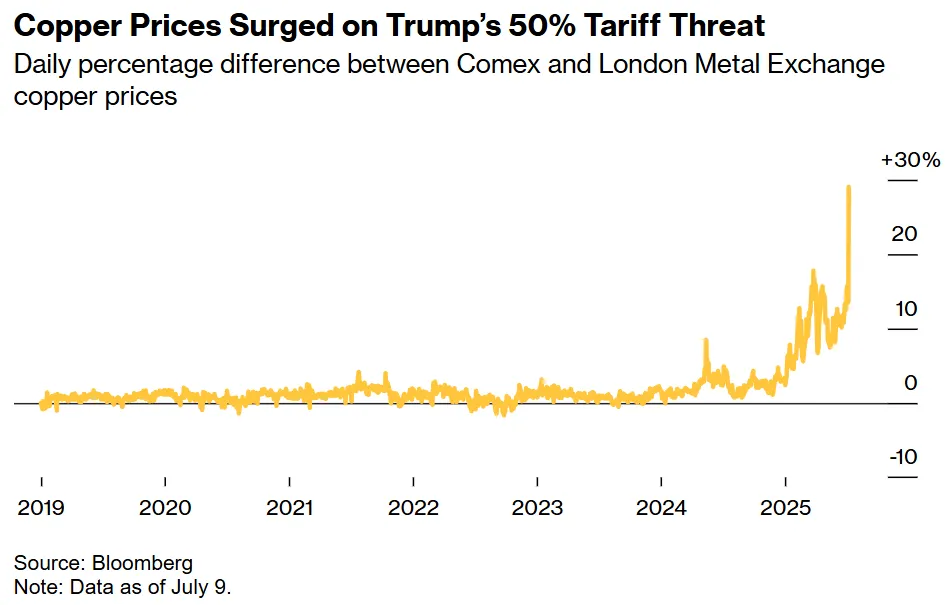
Exhausted traders worked through the night after Trump’s Tuesday announcement, trying to decide what to do with cargoes already on their way to the US, and whether to squeeze in further shipments. While tariffs were eventually expected, 50% was far higher than many in the market were betting on, and key questions remain about how they’ll be implemented.
For American businesses, surging copper prices mean higher costs and thinner margins, especially alongside levies on steel and aluminum that are already in place. Copper is mainly used in power infrastructure for its conductivity — making it key for both the energy transition and the data center boom — but it’s found in everything from air conditioners to electric vehicles.
With US prices about 25% higher than the LME’s global benchmark, US consumers are already feeling the impact of the tariffs, which Trump says will help support the development of a domestic copper industry.
The immediate winners are clear: The commodity traders, miners and banks that have been able to ship copper to the US. Based on the simple math of the wide ...