How Japan’s Leader Got Stuck in the Revolving Door
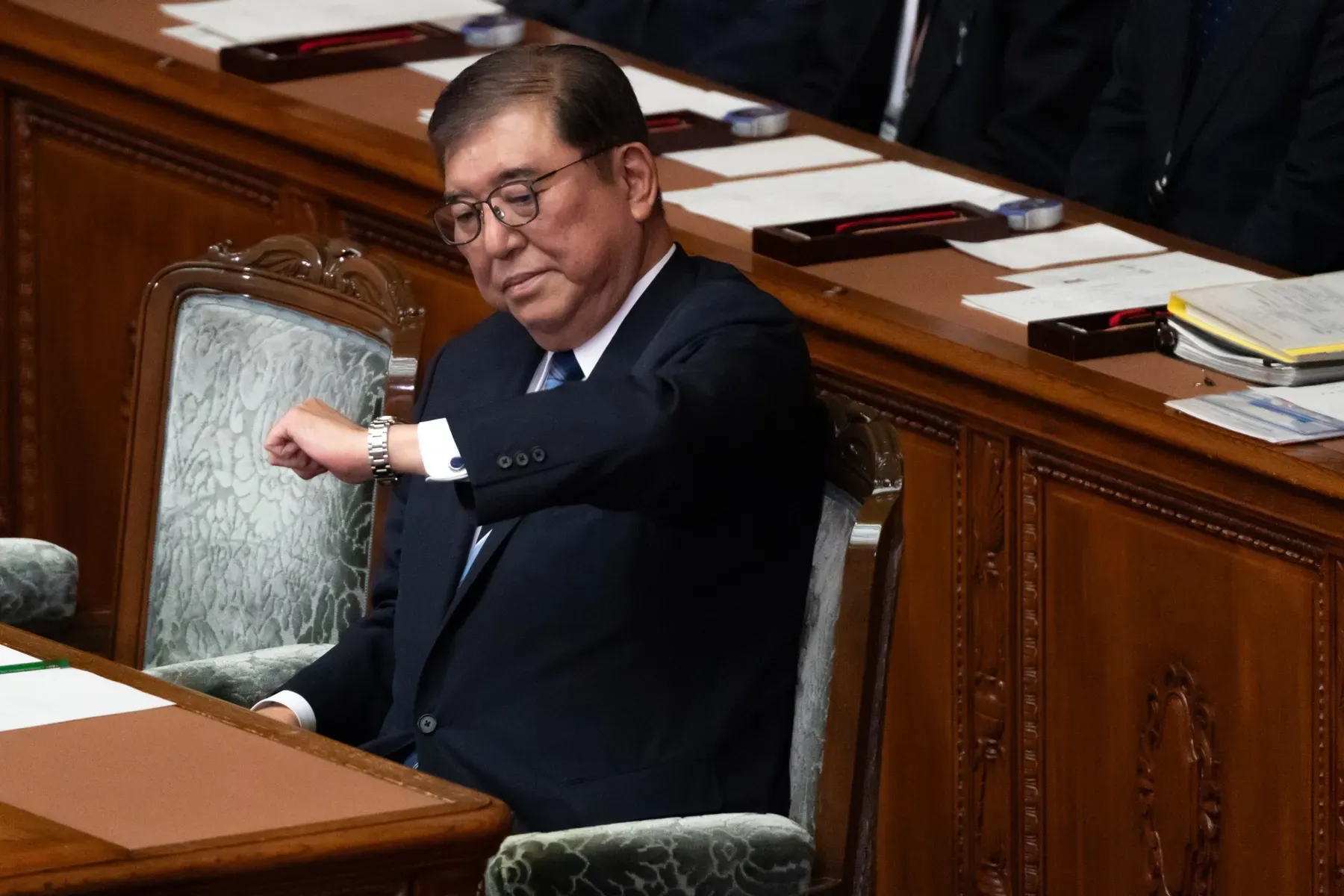
The idea of the “revolving door” at the Kantei, the offices of Japan’s prime minister, is a long-standing trope of English-language coverage of politics here.
일본 총리 관저인 간테이(Kantei)의 '회전문'이라는 개념은 이곳의 영문 정치 기사에서 오랫동안 관용적으로 사용되어 온 표현입니다.
After his shock victory in last year’s vote to lead the Liberal Democratic Party that dominates Japanese politics, Ishiba seemed to be following the usual pattern of short-lived premiers: Brief hope, swift disillusionment and then stepping down. Last year’s lower house defeat left him running a minority government, and a hammering in Tokyo’s assembly elections had him on the ropes. Being without a majority in either house of parliament seemed to seal his fate; surely no prime minister could avoid responsibility for such a drubbing.
Three days later, the inevitable seemed to happen. Media reports citing anonymous sources, from publications right across the political spectrum, leaked that the premier had decided to step down. It’s how every prime ministerial resignation in recent history has happened; the Yomiuri, the world’s best-selling newspaper, hastily printed extra editions handed out to commuters with the headline, in gigantic point size, “Prime Minister Ishiba to Resign.”
But it seemed one man had not read the script. After a meeting with LDP big-wigs, all former leaders, Ishiba denied in blunt terms any suggestion that he would go. And as the days passed without a resignation, those newspaper extras became collectors’ editions. A set of three sold for 5,000 yen ($34) on a flea-market app.
Perhaps he changed his mind, or maybe his political enemies leaked the story to try and force his hand. Yet the reports have been neither retracted nor corrected.
Now, even stranger things are happening. Since the start of this month, survey after survey suggests that voters want him to stay on as prime minister. Support for his Cabinet has risen, despite the successive drubbings. Ishiba has leaned into an image that he is being “bullied” by others in the LDP, with the most unusual sight of a “Don’t Resign, Ishiba!” protest in front of the Kantei.
As elsewhere, one possible answer for the polling may be methodology, with younger people underrepresented in the canvassing that is mostly done by telephone. Public broadcaster NHK is one organization that has acknowledged the skew in its results, as older voters tend both to pick up the phone more often, and to favor Ishiba.
The premier is reported to blame the election defeats on a funding scandal that predates his term. But his case isn’t helped by footage resurfacing of his past attacks on leaders who clung to power, such as in 2011 when he slammed then-Prime Minister Naoto Kan. “The cabinet is not your personal property,” Ishiba said. “It’s not there for your personal satisfaction1.”
All this leaves a power vacuum the country can ill afford at a time of increasing uncertainty, with questions around everything from fiscal direction to growing US-China rivalry, and the threats to business from still-unresolved tariffs.
It all sounds quite familiar on this side of the Pacific. But in the absence of a similar change of heart, the LDP is now debating its next steps. A panel is discussing whether to seek a recall election, which would bring forward the next race for leader, currently not scheduled until 2027. The party has never executed the provision, and it’s not clear when such a decision might be made. The prime minister could run in the election, in effect seeking a renewed mandate from his party.
But until then, the revolving door will keep spinning.
지난해 일본 정계를 장악하고 있는 자민당 총재 선거에서 뜻밖의 승리를 거둔 이시바 총리는 짧은 희망, 빠른 환멸, 그리고 사임이라는 단명 총리의 전형적인 패턴을 따르는 듯 보였습니다. 지난 해 중의원 선거 패배로 그는 소수 정부를 이끌게 되었고, 도쿄도의회 선거에서의 참패로 궁지에 몰렸습니다. 국회 양원에서 모두 과반수를 얻지 못한 것은 그의 운명을 결정짓는 것처럼 보였습니다. 분명히 어떤 총리도 그런 참패에 대한 책임을 피할 수는 없을 것이었습니다.
사흘 후, 피할 수 없는 일이 일어나는 것처럼 보였습니다. 정치 스펙트럼 전반에 걸친 언론 매체들이 익명의 소식통을 인용하여 총리가 사임하기로 결정했다고 보도했습니다. 이는 최근 일본 총리들의 사임이 이루어진 방식입니다. 세계에서 가장 많이 팔리는 신문인 요미우리 신문은 통근자들에게 나눠주기 위해 '이시바 총리 사임'이라는 거대한 크기의 헤드라인을 실은 특별판을 급히 인쇄했습니다.
하지만 한 사람은 대본을 읽지 않은 듯했습니다. 자민당의 전직 지도자들과의 회의 후, 이시바는 사임하겠다는 어떤 암시도 단도직입적으로 부인했습니다. 그리고 사임 없이 며칠이 지나자, 그 신문 특별판들은 수집가용 판이 되었습니다. 한 벼룩시장 앱에서는 세트 한 부가 5,000엔(약 34달러)에 팔리기도 했습니다.
어쩌면 그가 마음을 바꿨을 수도 있고, 아니면 그의 정적이 그에게 사임을 강요하기 위해 이야기를 흘렸을 수도 있습니다. 그러나 이 보도들은 철회되거나 정정되지 않았습니다.
이제 훨씬 더 이상한 일들이 벌어지고 있습니다. 이달 초부터 연이어 실시된 여론조사들은 유권자들이 그가 총리로 계속 머물기를 원한다고 시사합니다. 연이은 참패에도 불구하고 그의 내각 지지율은 상승했습니다. 이시바 총리는 자민당 내 다른 사람들에게 "왕따를 당하고 있다"는 이미지를 활용하고 있으며, 간테이 앞에서는 "사임하지 마세요, 이시바!"라는 시위라는 전례 없는 광경이 벌어졌습니다.
다른 곳과 마찬가지로, 여론조사 결과에 대한 한 가지 가능한 해답은 방법론일 수 있습니다. 주로 전화로 이루어지는 여론조사에서 젊은 층이 과소 대표되고 있습니다. 공영 방송 NHK는 고령 유권자들이 전화를 더 자주 받고 이시바를 선호하는 경향이 있어 결과에 편향이 있음을 인정한 기관 중 하나입니다.
총리는 선거 패배의 원인을 자신의 임기 이전에 있었던 자금 스캔들에 돌리는 것으로 알려져 있습니다. 그러나 2011년 당시 총리였던 간 나오토(Naoto Kan)를 비난하며 권력에 집착하는 지도자들을 공격했던 그의 과거 영상이 다시 부상하면서 그의 입장은 곤란해졌습니다. 당시 이시바는 "내각은 당신의 개인 재산이 아니다"라고 말했습니다. "당신의 개인적인 만족을 위해 있는 것이 아닙니다."
이 모든 상황은 재정 방향에서부터 커져가는 미중 경쟁, 그리고 아직 해결되지 않은 관세로 인한 기업 위협에 이르기까지 모든 것에 대한 의문이 제기되는 등 불확실성이 커지는 시기에 일본이 감당하기 어려운 권력 공백을 남기고 있습니다.
이 모든 것이 태평양 건너편에서는 꽤 익숙하게 들립니다. 그러나 비슷한 심경의 변화가 없는 상황에서, 자민당은 이제 다음 단계를 논의하고 있습니다. 한 위원회는 2027년까지 예정되어 있지 않은 다음 총재 선거를 앞당길 수 있는 리콜 선거를 추진할지 여부를 논의하고 있습니다. 자민당은 이 규정을 실행한 적이 없으며, 언제 그러한 결정이 내려질지는 불분명합니다. 총리는 이 선거에 출마하여 사실상 당으로부터 새로운 위임권을 구할 수 있습니다.
하지만 그때까지 회전문은 계속 돌아갈 것입니다.
고집있던 정치인 답게 이럴 때 어떻게 처신하는지 제일 잘 알고 있었을지도 ㅋㅋ
Staff Cuts and Turmoil Hit the CFTC While the Crypto It Oversees Booms
The Commodity Futures Trading Commission is poised to take on vast new responsibilities. Staff describe chaos, cutbacks and an atmosphere of resentment and paranoia.
상품선물거래위원회(CFTC)는 방대한 새로운 책임을 떠맡을 준비가 되어 있습니다. 직원들은 혼돈, 예산 삭감, 그리고 원망과 편집증의 분위기를 묘사합니다.
Since 1975, when futures were still mostly used by industrial companies and farmers, through the explosion of financial derivatives and the advent of cryptocurrencies, the CFTC has, with little fanfare, overseen markets that have grown to more than $500 trillion. But Pham wasn’t there to provide a polite history of the agency’s achievements.
1975년, 선물 거래가 주로 산업 회사와 농부들에 의해 사용될 때부터 금융 파생상품의 폭발적인 증가와 암호화폐의 출현에 이르기까지, CFTC는 큰 주목을 받지 않고 500조 달러 이상으로 성장한 시장들을 감독해 왔습니다. 하지만 팜은 기관의 업적에 대한 정중한 역사를 제공하기 위해 그곳에 있지 않았습니다.
Now seven months into what’s typically considered a caretaker role, Pham has removed several senior managers from their positions, while also overseeing a head count reduction of at least 15% and the discontinuation of a third of the agency’s open investigations, citing a backlog. Her tenure was set to end over the summer when President Donald Trump’s permanent pick, a former CFTC commissioner named Brian Quintenz, was expected to take charge. But Quintenz’s confirmation was put on hold after Tyler Winklevoss, of Facebook fame and co-founder of digital asset exchange Gemini, complained that the candidate has too many conflicts of interest and isn’t a true crypto believer—a surprising allegation to level at someone who led global policy for a16z crypto, a venture capital fund at Andreessen Horowitz that invests in crypto. Quintenz, who also sits on the board of prediction market Kalshi, declined to comment for this story.
Stripping back a staid financial regulator like the CFTC is unlikely to provoke the same outcry as cuts to the Environmental Protection Agency or the Department of Education—or even the Securities and Exchange Commission, which oversees stocks and bonds and has long been seen as the CFTC’s older sibling. And the CFTC certainly faced criticism for regulatory overreach under Pham’s predecessors. But the health of the low-profile agency matters. Futures and commodities sit at the heart of the global economy, facilitating trade in energy, food and finance and affecting the price of everything from coffee and corn oil to gasoline. When the financial system crashed in 2008, it was partly because of the growth of complex derivatives that have since been brought under CFTC oversight.
Two dozen current and former CFTC insiders and industry players, who spoke to Bloomberg Businessweek on condition of anonymity to candidly discuss internal agency matters, describe a regulator in disarray. Enforcement has slowed to a crawl, and, with just two of five commissioners in place—from opposing parties—it’s proving difficult to carry out critical agency business. Other problems predated Pham’s appointment. Taylor Foy, an agency spokesperson, says issues are “coming to the surface now, because we’re shining a light,” and any critiques Pham has offered are to help “the CFTC and its workforce achieve their full potential”—and fulfill her mandate from the Trump administration. “At no point was Pham told to be ‘hands off’ while leading the CFTC,” Foy said in a statement. “In fact, when she was named Acting Chairman in January, she was instructed to run the agency as if she were the permanent Chairman.”
The turmoil continues as the agency’s responsibilities, and the potential market risks, are multiplying. New measures are being written that would see cryptocurrency permeate every corner of finance, from Americans’ retirement funds to the Treasury’s coffers. Prediction markets like Kalshi and Polymarket are allowing investors to wager millions of dollars on the outcome of real-world events such as elections. Meanwhile, the president and his family are piling into the crypto arena.
The CFTC has a staff of about 640 and a budget one-sixth the size of the SEC’s. Some worry that it will struggle to cope with its new responsibilities. “As new markets and technologies develop at a rapid pace, it is imperative we have a regulator with the resources and expertise to protect consumers, prevent financial crime and facilitate responsible innovation,” says Dorothy DeWitt, a former CFTC division director.
현재 일반적으로 관리인 역할로 여겨지는 임기 7개월 차에 접어든 팜은 여러 고위 관리자들을 해임하고, 최소 15%의 인원 감축을 감독하며, 업무 적체를 이유로 기관의 공개 조사 중 3분의 1을 중단했습니다. 그녀의 임기는 여름에 도널드 트럼프 대통령의 영구적인 지명자인 전 CFTC 위원 브라이언 퀸텐즈가 인수인계를...